
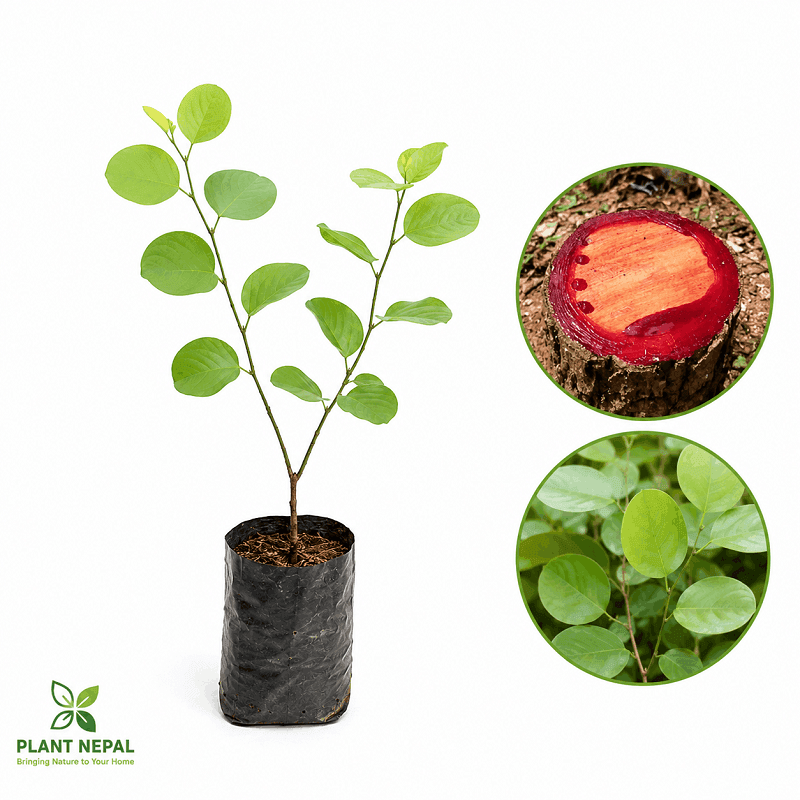
Description
Raktachandan Plant | 7 Powerful Reasons to Grow Red Sandalwood
Are you searching for a rare, premium, and valuable tree that combines beauty, cultural importance, and long-term investment potential? The Raktachandan Plant is one of the finest exotic trees you can add to your garden or plantation. Known worldwide as the Red Sandalwood Plant, this extraordinary species is admired for its striking reddish heartwood, ornamental foliage, and exceptional commercial value.
At Plant Nepal, we specialize in delivering healthy, genuine, and carefully nurtured exotic plants throughout Nepal. Every Raktachandan Plant is selected with care to ensure strong growth, better survival, and long-term performance. Whether you are a passionate plant collector, hobby gardener, commercial grower, or someone looking for a unique gift, this remarkable tree is an excellent choice.
Unlike ordinary trees, the Raktachandan Plant becomes more valuable as it matures. It is treasured by collectors, gardeners, conservationists, and forestry enthusiasts because of its rarity and magnificent appearance. With proper care and patience, this tree becomes a living asset that can remain beautiful for generations.
Plant Nepal proudly delivers premium plants safely to every district of Nepal with secure packaging, professional consultation, and dedicated after-sales support.
Why Buy Your Raktachandan Plant from Plant Nepal?
Plant Nepal is committed to bringing the finest collection of exotic, rare, and specialty plants to Nepalese gardeners. We believe every customer deserves healthy plants and expert guidance throughout their gardening journey.
When you purchase your Raktachandan Plant from Plant Nepal, you receive:
- Premium quality healthy plants
- Carefully selected vigorous seedlings
- Safe packaging for nationwide delivery
- Professional consultation before and after purchase
- Reliable customer support
- Genuine exotic plant varieties
- Secure delivery across all Nepal
- Easy ordering process
- Trusted service for plant lovers and collectors
Whether you live in Kathmandu, Pokhara, Chitwan, Butwal, Dharan, Nepalgunj, Biratnagar, Dhangadhi, or any rural municipality, Plant Nepal ensures your plants arrive safely and in excellent condition.
What is a Raktachandan Plant?
The Raktachandan Plant refers to the famous Red Sandalwood Tree (Pterocarpus santalinus), one of the world’s most valuable hardwood species. It belongs to the Fabaceae family and is naturally found in parts of southern India. Because of its slow growth and limited natural distribution, it has become one of the most sought-after rare trees among collectors worldwide.
Unlike white sandalwood, which is primarily valued for its fragrant oil, the Raktachandan Plant is famous for its naturally deep crimson heartwood. The wood has been appreciated for centuries in traditional craftsmanship, fine furniture, decorative carvings, musical instruments, and cultural artifacts.
Today, plant enthusiasts also admire this species simply because it is rare, elegant, and visually attractive in landscapes and private gardens.
Botanical Information
| Feature | Details |
|---|---|
| Botanical Name | Pterocarpus santalinus |
| Common Name | Red Sandalwood Plant |
| Nepali Name | Raktachandan Plant |
| Family | Fabaceae |
| Plant Type | Exotic Hardwood Tree |
| Growth Habit | Slow to Moderate |
| Lifespan | Several decades |
| Mature Height | 8–15 meters |
| Sunlight | Full Sun |
| Water Requirement | Moderate |
| Difficulty Level | Easy with proper care |
Origin and Natural Habitat
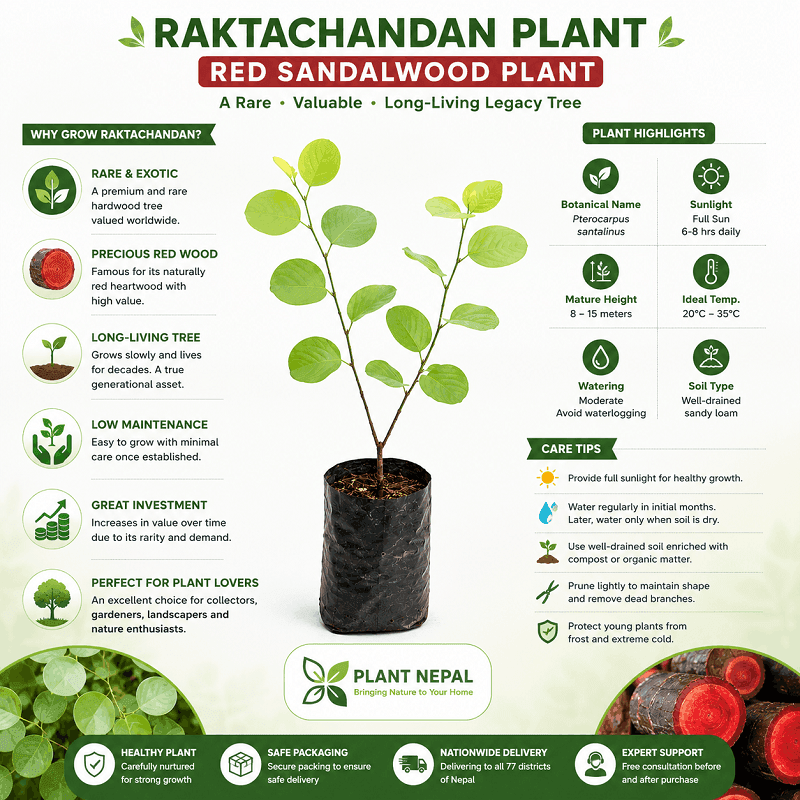
The Raktachandan Plant originates from the dry deciduous forests of southern India, particularly the Eastern Ghats. Over hundreds of years, it adapted to rocky hillsides, well-drained soils, and warm climates.
Its ability to survive difficult growing conditions makes it surprisingly resilient once established. Although naturally native to India, it can also grow successfully in suitable regions of Nepal where frost is limited and drainage is excellent.
Gardeners across Asia increasingly cultivate the Raktachandan Plant because of its rarity, ornamental beauty, and conservation importance.
Why Plant Lovers Admire the Raktachandan Plant
Plant collectors are constantly searching for uncommon species that make their gardens truly special. Few trees capture attention quite like the Raktachandan Plant.
Its elegant green leaves create a graceful canopy while its slow-growing nature makes every stage of development exciting. As the tree matures over many years, it gradually develops the famous reddish heartwood that has earned worldwide admiration.
Owning a Raktachandan Plant is not simply about growing a tree—it is about nurturing a living legacy.
7 Powerful Reasons to Grow Red Sandalwood
1. A Rare and Exclusive Tree
One of the biggest reasons to grow a Raktachandan Plant is its rarity. Unlike common ornamental trees, genuine Red Sandalwood is not widely available.
Collectors appreciate owning something unique that very few gardens possess. Its exclusivity immediately increases the value and prestige of your landscape.
Whether planted in a private garden, botanical collection, educational institution, or agroforestry project, this tree always attracts attention.
2. Exceptional Ornamental Beauty
The Raktachandan Plant offers year-round visual appeal.
Its lush green foliage provides excellent contrast against surrounding plants, while its naturally balanced branching structure develops into an elegant shade tree.
Young plants already display healthy, attractive leaves, making them suitable for decorative landscapes long before maturity.
When combined with flowering shrubs, palms, or fruit trees, the Red Sandalwood Plant creates an impressive tropical landscape.
3. Long-Term Investment Value
Unlike seasonal flowers that last only a few months, the Raktachandan Plant represents a long-term investment in your garden.
Healthy trees can live for decades while continuously increasing in size and significance.
Many collectors appreciate this species because mature specimens become increasingly valuable over time due to their rarity and slow growth.
Growing one today means future generations can continue enjoying its beauty.
4. Suitable for Nepal’s Diverse Climate
Many exotic trees struggle in Nepal’s varying climates. Fortunately, the Raktachandan Plant adapts well when grown under proper conditions.
It performs particularly well in warm areas with:
- Good sunlight
- Well-drained soil
- Moderate irrigation
- Protection from prolonged frost
Gardeners in many regions of Nepal have successfully established healthy Red Sandalwood trees by following proper cultivation techniques.
Our experts at Plant Nepal also provide consultation to help customers select the ideal planting location.
5. Low Maintenance After Establishment
One reason hobby gardeners love the Raktachandan Plant is its relatively low maintenance once established.
After developing a healthy root system, it requires:
- Moderate watering
- Occasional pruning
- Seasonal fertilization
- Good drainage
- Plenty of sunlight
Compared with many ornamental exotic plants, Red Sandalwood demands relatively little routine care while offering exceptional long-term rewards.
6. Perfect for Plant Collectors
Every serious collector dreams of owning rare species that few others possess.
The Raktachandan Plant perfectly fits that desire.
Its botanical importance, attractive foliage, cultural history, and worldwide recognition make it one of the most desirable specialty trees available.
Whether you collect bonsai material, medicinal plants, hardwood species, or unusual tropical trees, this remarkable plant deserves a place in your collection.
7. A Living Legacy for Future Generations
Perhaps the greatest reason to grow a Raktachandan Plant is the legacy it creates.
Unlike many garden plants that live only a few years, Red Sandalwood can remain part of your family’s landscape for decades.
Imagine planting a small sapling today and watching it grow alongside your family through the years. It becomes more than just a tree—it becomes a symbol of patience, care, and respect for nature.
For parents, schools, eco-parks, and conservation-minded gardeners, planting a Raktachandan Plant is a meaningful investment in the future.
A Premium Choice for Exotic Plant Enthusiasts
If your dream garden includes rare and extraordinary species, the Raktachandan Plant deserves a prominent place. Its combination of rarity, graceful appearance, and long-term value makes it one of the most rewarding trees to cultivate.
At Plant Nepal, we are passionate about helping plant lovers discover exceptional species that inspire curiosity and appreciation for nature. Our carefully selected Red Sandalwood plants are nurtured to give you the best possible start, and our team is always ready to provide guidance so your gardening journey is both enjoyable and successful.
In the next section, you’ll learn everything about growing, caring for, and maintaining your Raktachandan Plant, including soil preparation, watering schedules, fertilization, pruning techniques, pest management, and practical cultivation tips for different regions of Nepal.
Raktachandan Plant – Complete Growing & Care Guide
Growing a Raktachandan Plant is a rewarding journey for anyone who loves rare trees. While this species grows more slowly than many common ornamental trees, it is remarkably resilient when provided with the right environment. With patience and proper care, your Raktachandan Plant can become one of the most treasured trees in your collection.
Whether you are planting in your home garden, a farm, a hillside, or an agroforestry project, following the right cultivation practices will significantly improve growth and survival.
Ideal Climate for Raktachandan Plant
The Raktachandan Plant prefers tropical to subtropical climates with plenty of sunlight. It naturally grows in warm regions and performs best where temperatures remain moderate throughout the year.
Best Temperature
- Ideal: 20°C–35°C
- Can tolerate higher temperatures once established.
- Young plants should be protected from severe frost.
Sunlight
The Raktachandan Plant loves full sunlight.
For best growth:
- 6–8 hours of direct sunlight daily.
- Avoid planting beneath large shade trees.
- More sunlight generally encourages stronger growth and healthier foliage.
Suitable Areas of Nepal
The Raktachandan Plant can be successfully grown in many regions of Nepal with proper site selection.
Suitable regions include:
- Kathmandu Valley (with frost protection during early years)
- Chitwan
- Makwanpur
- Hetauda
- Butwal
- Dang
- Nepalgunj
- Pokhara (well-drained sites)
- Dharan
- Biratnagar
- Jhapa
- Kailali
- Kanchanpur
Lower hills and Terai regions generally provide the most favorable growing conditions.
Choosing the Right Planting Location
Selecting the correct location is one of the most important factors for a healthy Raktachandan Plant.
Choose a place that offers:
- Full sunlight
- Excellent drainage
- Good air circulation
- Space for future growth
- Protection from waterlogging
Avoid:
- Marshy land
- Constantly wet soil
- Heavy clay without drainage
- Deep shade
Best Soil for Raktachandan Plant
One reason the Raktachandan Plant survives well is its adaptability to different soil types.
However, it performs best in:
- Sandy loam
- Gravelly soil
- Rocky soil
- Well-drained loam
Ideal soil pH:
6.5–7.5
Heavy clay soil should be improved by mixing:
- River sand
- Compost
- Organic manure
- Cocopeat (optional)
Good drainage is far more important than rich soil.
Preparing the Planting Pit
Before planting your Raktachandan Plant, prepare the soil carefully.
Recommended pit size:
2 ft × 2 ft × 2 ft
Mix:
- 50% garden soil
- 25% well-rotted compost
- 25% river sand
- Small amount of organic bone meal (optional)
Allow the pit to rest for several days before planting.
Watering Guide
Young Raktachandan Plant seedlings require consistent watering during establishment.
First 3 Months
- Water every 2–3 days.
3–12 Months
- Water once or twice weekly depending on weather.
Mature Trees
Once established, the Raktachandan Plant becomes relatively drought tolerant.
Avoid:
- Standing water
- Overwatering
- Constantly wet roots
Too much water causes root problems much faster than slightly dry soil.
Fertilizer Schedule
Although the Raktachandan Plant naturally grows in nutrient-poor soils, occasional feeding encourages healthier growth.
Recommended fertilizers:
- Well-decomposed farmyard manure
- Vermicompost
- Organic compost
- Neem cake
Apply organic fertilizer:
- Early spring
- Beginning of monsoon
- Late summer
Avoid excessive nitrogen fertilizers as they may encourage weak growth.
Mulching
Mulching greatly benefits young Raktachandan Plant seedlings.
Suitable mulch:
- Dry leaves
- Rice straw
- Wood chips
- Coconut husk
Benefits include:
- Moisture retention
- Reduced weeds
- Better soil temperature
- Increased microbial activity
Keep mulch a few centimeters away from the trunk.
Pruning
Fortunately, the Raktachandan Plant requires minimal pruning.
Remove only:
- Dead branches
- Broken limbs
- Diseased growth
- Crossing branches
Prune during the dry season using clean, sharp tools.
Growing in Pots
Many collectors begin with a Raktachandan Plant in containers before transplanting it into the ground.
Choose:
- Minimum 18–24 inch pot
- Large drainage holes
- Premium well-drained potting mix
Container plants require:
- More frequent watering
- Regular feeding
- Occasional root inspection
After a few years, transplant into open ground for optimal development.
Propagation
The Raktachandan Plant is commonly propagated from seeds.
Professional nurseries also use:
- Healthy seedlings
- Grafted plants (where applicable)
- Research propagation techniques
Fresh seeds generally provide better germination than older seeds.
Growth Rate
The Raktachandan Plant is considered a slow to moderate-growing hardwood tree.
Growth depends upon:
- Sunlight
- Soil quality
- Water management
- Climate
- Fertility
- Plant health
Patience is essential because this species rewards long-term care with exceptional beauty.
Common Pests
The Raktachandan Plant is relatively hardy but may occasionally experience:
- Aphids
- Leaf-eating caterpillars
- Scale insects
- Mealybugs
Most infestations remain manageable using:
- Neem oil spray
- Organic insecticidal soap
- Manual removal
- Proper sanitation
Healthy trees naturally resist many pests.
Common Diseases
Good cultural practices prevent most diseases.
Possible issues include:
Root Rot
Usually caused by:
- Poor drainage
- Overwatering
Leaf Spot
Often appears during prolonged humidity.
Fungal Problems
Prevent by:
- Good airflow
- Proper spacing
- Avoiding overhead irrigation
Winter Care
Young Raktachandan Plant seedlings benefit from additional protection during cold weather.
Recommended practices:
- Reduce watering.
- Apply mulch.
- Protect from frost.
- Cover young plants on extremely cold nights if necessary.
Mature trees become much more tolerant.
Summer Care
During hot months:
- Water deeply but less frequently.
- Maintain mulch.
- Monitor for insects.
- Avoid excessive fertilizer during heat waves.
Landscaping Uses
The Raktachandan Plant makes an impressive feature tree.
Ideal locations include:
- Premium home gardens
- Farmhouses
- Resorts
- Botanical gardens
- Eco parks
- Educational institutions
- Meditation gardens
- Agroforestry projects
Its graceful appearance complements tropical and subtropical landscapes beautifully.
Cultural Importance
For centuries, the Raktachandan Plant has held cultural and historical significance across South Asia. Its distinctive red heartwood has traditionally been appreciated in decorative craftsmanship and ceremonial objects.
Today, it also represents conservation, patience, and the preservation of valuable tree species for future generations.
Conservation Value
Because natural populations have declined over time, cultivating the Raktachandan Plant responsibly contributes to awareness and appreciation of this remarkable species.
Planting rare trees in gardens, educational institutions, and managed landscapes helps encourage long-term conservation and botanical interest.
Is the Raktachandan Plant Suitable for Beginners?
Yes. Although it is a valuable hardwood species, the Raktachandan Plant is surprisingly manageable for beginners who provide:
- Full sunlight
- Well-drained soil
- Moderate watering
- Patience
- Occasional organic feeding
Its low-maintenance nature after establishment makes it a rewarding choice for first-time exotic tree growers.
Why Plant Nepal is the Right Choice
At Plant Nepal, every Raktachandan Plant is selected with care to ensure healthy establishment and strong future growth. We are passionate about helping hobby gardeners, collectors, landscapers, and commercial growers succeed with rare and exotic plants.
When you order from Plant Nepal, you receive:
- Healthy nursery-grown plants
- Carefully packed deliveries
- Safe shipping to all districts of Nepal
- Expert growing advice
- Friendly customer support
- Genuine exotic plant varieties
- Consultation before and after purchase
We believe every customer deserves not only a healthy plant but also the confidence to grow it successfully.
Helpful Resources
Internal Links (Plant Nepal)
- Complete Exotic Plant Collection: https://plantnepal.com/product-category/exotic-plants/
- Plant Care Blog & Growing Tips: https://plantnepal.com/blog/
Related Internal Product
- Japanese Katus (Rare Fruit Plant): https://plantnepal.com/
Trusted External Resources
- Royal Botanic Gardens, Kew – Plant Care & Botanical Information: https://powo.science.kew.org/
- Missouri Botanical Garden – Gardening & Plant Growing Guides: https://www.missouribotanicalgarden.org/
These resources provide additional botanical information, gardening techniques, and general plant care knowledge to help you successfully grow your Raktachandan Plant.
Raktachandan Plant – FAQs, Delivery Information & SEO Resources (Part 3)
Frequently Asked Questions (FAQs)
1. What is a Raktachandan Plant?
The Raktachandan Plant is the Red Sandalwood tree (Pterocarpus santalinus), a rare and valuable hardwood species admired for its attractive appearance, cultural importance, and long lifespan.
2. Is the Raktachandan Plant suitable for Nepal?
Yes. The Raktachandan Plant can grow successfully in many parts of Nepal when planted in well-drained soil with plenty of sunlight. Young plants should be protected from severe frost.
3. How much sunlight does a Raktachandan Plant need?
It performs best with 6–8 hours of direct sunlight every day.
4. How often should I water my Raktachandan Plant?
Water regularly during the first few months after planting. Once established, water only when the soil begins to dry. Avoid waterlogging.
5. Is the Raktachandan Plant easy to grow?
Yes. With proper sunlight, drainage, and moderate watering, the Raktachandan Plant is relatively easy to maintain.
6. Can I grow it in a pot?
Yes. Young plants can be grown in large containers before transplanting into the ground.
7. How fast does the Raktachandan Plant grow?
It is considered a slow to moderate-growing hardwood tree. Growth improves with good care and suitable environmental conditions.
8. What type of soil is best?
Well-drained sandy loam or gravelly soil with a pH of approximately 6.5–7.5 is ideal.
9. Does the Raktachandan Plant require fertilizer?
Organic compost, vermicompost, or well-rotted farm manure applied two to three times a year is generally sufficient.
10. Can beginners grow this plant?
Absolutely. Beginners can successfully grow the Raktachandan Plant by following basic planting and care guidelines.
11. Is the plant drought tolerant?
Once established, it tolerates dry conditions better than constantly wet soil.
12. What pests may affect the plant?
Occasionally aphids, mealybugs, caterpillars, or scale insects may appear. Neem oil and good garden hygiene usually help manage them.
13. Can I plant it in my home garden?
Yes. It is an excellent feature tree for spacious home gardens, farms, and landscapes.
14. Is this an ornamental tree?
Yes. Its elegant foliage and graceful structure make it an attractive ornamental tree.
15. How long can the tree live?
With proper care, the Raktachandan Plant can live for several decades.
16. Can Plant Nepal deliver outside Kathmandu?
Yes. We safely deliver plants to customers across all districts of Nepal using secure packaging.
17. Will my plant be packed safely?
Yes. Every plant is carefully packed to reduce stress during transportation and maximize survival after delivery.
18. Do you provide planting guidance?
Yes. Plant Nepal offers consultation before and after purchase to help customers grow healthy plants successfully.
19. Who should buy a Raktachandan Plant?
This plant is perfect for collectors, hobby gardeners, plant lovers, landscapers, educational institutions, eco-parks, and anyone interested in growing rare and exotic trees.
20. Why should I buy from Plant Nepal?
Plant Nepal focuses on healthy, genuine, and carefully selected exotic plants, supported by expert consultation and safe nationwide delivery.
Why Plant Lovers Choose Plant Nepal
At Plant Nepal, we believe every garden deserves something extraordinary. Our mission is to introduce Nepalese gardeners to premium-quality exotic, rare, and specialty plants while providing reliable guidance throughout their gardening journey.
When you choose Plant Nepal, you benefit from:
- Healthy and well-established nursery plants
- Genuine exotic and rare plant varieties
- Expert consultation before and after purchase
- Secure packaging for long-distance transport
- Safe delivery across all 77 districts of Nepal
- Friendly customer support
- Trusted service for hobby gardeners, collectors, and commercial growers
Whether you are building a home garden, expanding a farm, creating a botanical collection, or searching for a memorable gift, Plant Nepal is committed to delivering quality plants with care.
Safe Delivery Across Nepal
We proudly deliver the Raktachandan Plant to customers throughout Nepal. Every order is packed with attention to protect the roots and foliage during transit, helping ensure your plant arrives healthy and ready for planting.
Our secure packaging is designed for both nearby and long-distance deliveries, giving customers confidence no matter where they live.
Contact Plant Nepal
Plant Nepal
📍 Location: Basundhara, Kathmandu, Nepal
Google Maps: https://maps.app.goo.gl/Z2XSopEf1VeMGkMG6
📞 Phone / WhatsApp: +977 980-1695799
📧 Email: plantnepalofficial@gmail.com
🌐 Website: https://plantnepal.com
Facebook: https://www.facebook.com/PlantNepalOfficial/
TikTok: https://www.tiktok.com/@plant.nepal
X (Twitter): https://x.com/PlantNepal
We are always happy to answer your questions and help you choose the perfect exotic plant for your garden.
Order Your Raktachandan Plant Today
Bring home one of the world’s most admired hardwood trees and begin a rewarding gardening journey with Plant Nepal. The Raktachandan Plant offers beauty, rarity, and lasting value, making it a meaningful addition to any landscape.
Order today and let our team safely deliver a healthy, premium-quality plant anywhere in Nepal. We are here to support you from planting day to long-term care.



Reviews
There are no reviews yet.