

Mangosteen Fruit Plant: 9 Stunning Benefits for Your Garden
Mangosteen Fruit Plant: 9 Stunning Benefits for Your Garden Introduction Are you searching for a rare, exotic, and highly rewarding fruit tree to transform your home garden into…
See whether this plant suits your locality and growing conditions.
Find my plant →Growing profile
Garcinia mangostana
Mangosteen Fruit Plant: 9 Stunning Benefits for Your Garden
Introduction
Are you searching for a rare, exotic, and highly rewarding fruit tree to transform your home garden into a tropical paradise? The Mangosteen Fruit Plant is one of the most desirable fruit plants among plant collectors, hobbyist gardeners, and tropical fruit enthusiasts worldwide. Known as the “Queen of Fruits,” mangosteen is prized for its delicious taste, unique appearance, exceptional nutritional value, and ornamental beauty.
At Plant Nepal, we proudly offer premium-quality Mangosteen Plant seedlings and consultation services to help gardeners successfully grow this magnificent tropical fruit tree. Whether you are an experienced gardener or a beginner looking to expand your exotic fruit collection, the Mangosteen Fruit Plant is a fantastic investment for your garden.
The Mangosteen Plant not only produces one of the world’s most delicious fruits but also enhances the beauty of your landscape with its glossy green leaves and elegant growth habit. As interest in rare fruit cultivation grows across Nepal, more gardeners are discovering the remarkable benefits of growing mangosteen at home.
In this detailed guide, you’ll discover everything about the Mangosteen Fruit Plant, including its origin, characteristics, growing requirements, care tips, and the 9 stunning benefits that make it a must-have addition to your garden.
What is a Mangosteen Fruit Plant?
The Mangosteen Fruit Plant (Garcinia mangostana) is a tropical evergreen fruit tree native to Southeast Asia. It belongs to the Clusiaceae family and is widely cultivated in Thailand, Malaysia, Indonesia, the Philippines, and other tropical regions.
Mangosteen produces round purple fruits with a thick rind and soft, juicy white flesh inside. The fruit is celebrated for its sweet, aromatic flavor that combines hints of peach, strawberry, pineapple, and citrus.
Because of its exceptional taste and premium market value, the Mangosteen Fruit Plant is considered one of the most valuable tropical fruit trees available today.
Scientific Classification
- Scientific Name: Garcinia mangostana
- Family: Clusiaceae
- Common Name: Mangosteen
- Fruit Type: Tropical Fruit
- Plant Type: Evergreen Tree
- Lifespan: Long-lived Perennial
- Growth Habit: Upright and Dense
Origin and History of Mangosteen
The Mangosteen Fruit Plant has been cultivated for centuries throughout Southeast Asia. Historical records suggest that mangosteen was highly valued by royalty and noble families due to its delicious flavor and medicinal properties.
Many fruit enthusiasts refer to mangosteen as the “Queen of Fruits,” while durian is often called the “King of Fruits.” This prestigious reputation has helped increase the popularity of the Mangosteen Fruit Plant among collectors worldwide.
Today, gardeners across Nepal are beginning to appreciate the unique beauty and fruiting potential of this tropical treasure.
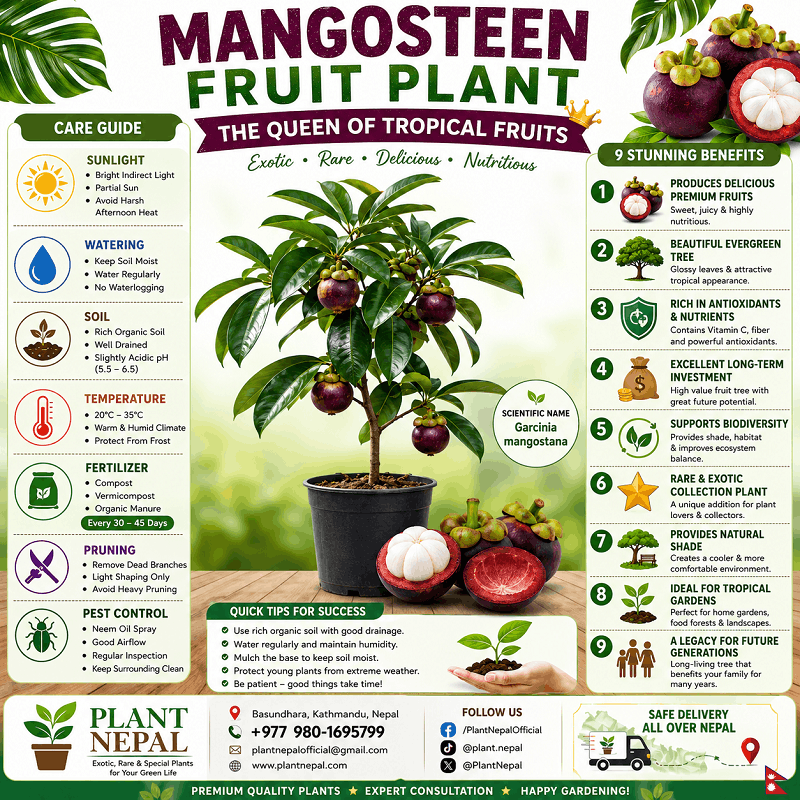
9 Stunning Benefits of Growing a Mangosteen Fruit Plant
1. Produces One of the World’s Most Delicious Fruits
The biggest attraction of the Mangosteen Fruit Plant is undoubtedly its fruit.
The creamy white segments inside the fruit offer an unforgettable taste experience. The flavor is sweet, refreshing, and aromatic, making mangosteen one of the most sought-after tropical fruits globally.
Many fruit lovers consider mangosteen superior to many common fruits because of its unique flavor profile.
2. Adds Exotic Beauty to Your Garden
The Mangosteen Fruit Plant is highly ornamental.
Features include:
- Dark green glossy leaves
- Dense canopy
- Attractive growth pattern
- Elegant tropical appearance
- Beautiful purple fruits
Even before fruit production begins, the tree serves as a stunning landscape specimen.
For gardeners seeking rare tropical plants, the Mangosteen Fruit Plant instantly elevates the visual appeal of any garden.
3. Rich in Valuable Nutrients
Mangosteen fruits contain several important nutrients including:
- Vitamin C
- Dietary fiber
- Potassium
- Magnesium
- Manganese
- Antioxidants
These nutrients contribute to overall wellness and make mangosteen a highly valued fruit among health-conscious consumers.
4. Excellent Long-Term Investment
Rare fruit trees often increase in value over time.
A healthy Mangosteen Fruit Plant can continue producing fruits for decades under favorable conditions.
As demand for exotic fruits rises in Nepal, growing your own mangosteen tree may provide both personal enjoyment and future economic benefits.
5. Supports Biodiversity
Growing a Mangosteen Fruit Plant contributes positively to garden biodiversity.
The tree provides:
- Shade
- Habitat for beneficial insects
- Improved ecosystem balance
- Greater plant diversity
A diverse garden is generally healthier and more resilient against environmental stresses.
6. Highly Desired by Plant Collectors
Collectors are constantly searching for rare and unique species.
The Mangosteen Fruit Plant is often considered a premium addition to exotic fruit collections because it remains relatively uncommon in many regions.
Owning a mangosteen tree allows gardeners to cultivate a truly special plant that attracts admiration from visitors and fellow collectors.
7. Provides Natural Shade
As the tree matures, the Mangosteen Fruit Plant develops a dense canopy that offers valuable shade.
Benefits include:
- Cooler garden environment
- Protection for shade-loving plants
- Improved microclimate
- Enhanced outdoor comfort
This makes mangosteen useful for both fruit production and landscape design.
8. Ideal for Tropical Gardening Enthusiasts
Gardeners who love tropical species will appreciate the beauty and challenge of growing a Mangosteen Fruit Plant.
Its distinctive foliage and exotic fruiting habit make it one of the most rewarding tropical fruit trees to cultivate.
Successfully growing mangosteen often becomes a source of pride for dedicated gardeners.
9. Creates a Legacy for Future Generations
A mature Mangosteen Fruit Plant can live and produce fruits for many years.
Planting one today can provide enjoyment for family members for decades to come.
Many gardeners view rare fruit trees as living investments that connect generations through gardening and sustainable food production.
Unique Features of Mangosteen Fruit Plant
Several characteristics distinguish the Mangosteen Fruit Plant from other tropical fruit trees.
Attractive Foliage
The tree produces thick, leathery leaves that remain attractive year-round.
Premium Fruit Value
Mangosteen fruits are often sold at premium prices due to their exceptional taste and limited availability.
Long Lifespan
A properly maintained tree can remain productive for many years.
Evergreen Beauty
Unlike deciduous fruit trees, mangosteen retains its foliage throughout the year.
Ideal Growing Conditions
To successfully grow a Mangosteen Fruit Plant, gardeners should understand its preferred environment.
Sunlight
- Partial to full sunlight
- Young plants benefit from some afternoon protection
Temperature
- Prefers warm tropical conditions
- Sensitive to frost
Soil
- Well-drained soil
- Rich organic matter
- Slightly acidic conditions
Water
- Consistent moisture
- Avoid waterlogging
Humidity
- Performs best in humid environments
The climate in many regions of Nepal can support successful cultivation with proper care and protection.
Complete Mangosteen Fruit Plant Care Guide
Growing a Mangosteen Fruit Plant successfully requires patience and proper care. While it is considered a slow-growing tropical fruit tree, the rewards are well worth the effort. With the right environment and maintenance, your mangosteen tree can thrive and eventually produce delicious fruits.
Watering Requirements
The Mangosteen Fruit Plant prefers consistently moist soil.
Watering Tips:
- Water deeply when the top layer of soil begins to dry.
- Avoid letting the soil dry out completely.
- Reduce watering during cooler seasons.
- Ensure proper drainage to prevent root rot.
Young plants are particularly sensitive to drought stress, so maintaining soil moisture is important during the establishment phase.
Fertilization Schedule
Regular feeding promotes healthy growth and strong root development.
Recommended Fertilizers:
- Well-rotted compost
- Vermicompost
- Organic manure
- Balanced NPK fertilizer
- Seaweed extract
Apply organic matter around the base of the Mangosteen Fruit Plant every few months to improve soil fertility.
Mulching Benefits
Mulching helps maintain ideal growing conditions.
Benefits include:
- Moisture retention
- Temperature regulation
- Weed suppression
- Improved soil health
Organic mulch such as dried leaves, straw, or compost works exceptionally well around the Mangosteen Fruit Plant.
Pruning Requirements
Unlike many fruit trees, mangosteen requires very little pruning.
Only remove:
- Dead branches
- Diseased growth
- Damaged stems
Light shaping can improve airflow and overall appearance.
Pest Management
The Mangosteen Fruit Plant is generally resistant to many common pests.
However, occasionally monitor for:
- Aphids
- Scale insects
- Mealybugs
- Leaf-eating caterpillars
Organic neem oil sprays can help control minor infestations safely.
Disease Prevention
Preventive care is always better than treatment.
To reduce disease risks:
- Avoid overwatering
- Improve air circulation
- Use clean gardening tools
- Remove infected plant parts promptly
Healthy plants are naturally more resistant to disease.
How to Plant a Mangosteen Fruit Plant
Proper planting is the foundation for long-term success.
Step 1: Select the Right Location
Choose a site with:
- Bright sunlight
- Protection from strong winds
- Well-draining soil
- Adequate space for future growth
Step 2: Prepare the Planting Hole
Dig a hole:
- Twice as wide as the root ball
- Slightly deeper than the container
Mix compost into the soil before planting.
Step 3: Position the Plant
Carefully place the Mangosteen Fruit Plant into the hole.
Ensure:
- Roots are spread naturally
- Root crown remains above soil level
- Plant stands upright
Step 4: Backfill and Water
Fill the hole with prepared soil and water thoroughly.
Apply mulch around the base while keeping it away from the stem.
Why Plant Lovers Adore the Mangosteen Fruit Plant
Plant enthusiasts are constantly searching for unique and rewarding species.
The Mangosteen Fruit Plant offers several qualities that make it irresistible:
Rare and Exclusive
Not everyone has a mangosteen tree in their collection.
Owning one demonstrates a passion for exotic gardening and rare fruit cultivation.
Conversation Starter
Visitors are naturally curious about unusual plants.
A healthy Mangosteen Fruit Plant often becomes the highlight of any garden tour.
Educational Value
Growing mangosteen teaches gardeners about:
- Tropical horticulture
- Soil management
- Fruit production
- Long-term plant care
Rewarding Gardening Experience
Watching your tree develop over time provides tremendous satisfaction.
Few gardening achievements compare to harvesting your own mangosteen fruits.
Mangosteen Fruit Plant for Nepalese Gardens
Interest in exotic fruit cultivation is increasing rapidly across Nepal.
Many gardeners are moving beyond traditional fruit trees and exploring rare tropical species.
The Mangosteen Fruit Plant is becoming a favorite among:
- Plant collectors
- Hobby gardeners
- Organic growers
- Fruit enthusiasts
- Home gardeners
With proper care, it can become one of the most treasured plants in your collection.
Landscaping Uses
Besides fruit production, the Mangosteen Fruit Plant serves several landscaping purposes.
Tropical Theme Gardens
Mangosteen blends beautifully with:
- Palms
- Bananas
- Heliconias
- Ginger plants
- Ornamental tropical species
Backyard Food Forests
Permaculture enthusiasts appreciate the tree’s long lifespan and edible yield.
Premium Home Landscapes
The tree’s elegant foliage adds sophistication and greenery to residential landscapes.
Botanical Collections
Collectors often include mangosteen among their prized exotic specimens.
Nutritional Importance of Mangosteen Fruits
Mangosteen fruits are valued not only for their flavor but also for their nutritional content.
They contain:
Vitamin C
Supports immune function and overall health.
Dietary Fiber
Promotes digestive wellness.
Antioxidant Compounds
Mangosteen contains naturally occurring plant compounds that contribute to its popularity among health-conscious consumers.
Essential Minerals
The fruit provides valuable nutrients that support daily wellness.
Common Mistakes to Avoid
Many gardeners unintentionally slow the growth of their Mangosteen Fruit Plant by making avoidable mistakes.
Overwatering
Excess water can damage roots and encourage disease.
Poor Drainage
Always use well-drained soil.
Frost Exposure
Mangosteen is highly sensitive to cold temperatures.
Heavy Pruning
Excessive pruning may reduce growth and weaken the plant.
Neglecting Soil Health
Rich organic soil is essential for long-term success.
Avoiding these mistakes significantly improves the chances of growing a healthy tree.
Companion Plants for Mangosteen
Several plants grow well alongside the Mangosteen Fruit Plant.
Popular companions include:
- Banana plants
- Turmeric
- Ginger
- Galangal
- Pineapple
- Papaya
- Lemongrass
These tropical species help create a diverse and productive garden ecosystem.
Environmental Benefits
Growing a Mangosteen Fruit Plant contributes positively to the environment.
Carbon Capture
Trees naturally absorb carbon dioxide from the atmosphere.
Improved Air Quality
Healthy plants contribute to cleaner air.
Wildlife Support
Trees provide shelter for beneficial organisms.
Sustainable Gardening
Fruit trees encourage local food production and reduce transportation-related impacts.
For eco-conscious gardeners, mangosteen is an excellent addition to a sustainable landscape.
Why Buy from Plant Nepal?
Plant Nepal specializes in delivering premium-quality exotic and rare plants throughout Nepal.
When you purchase a Mangosteen Fruit Plant from us, you receive:
Healthy Plants
We carefully select vigorous and healthy specimens.
Expert Consultation
Our team provides guidance on planting, care, and maintenance.
Safe Packaging
Plants are packed securely to ensure safe arrival.
Nationwide Delivery
We deliver across Nepal with maximum care and protection.
Trusted Plant Source
Plant Nepal is committed to helping customers successfully grow rare and exotic plants.
Whether you are an experienced collector or a beginner gardener, we are here to support your gardening journey.
Frequently Asked Questions (FAQ) About Mangosteen Fruit Plant
1. What is a Mangosteen Fruit Plant?
The Mangosteen Fruit Plant (Garcinia mangostana) is a tropical evergreen fruit tree famous for producing delicious purple fruits with sweet white flesh. It is widely known as the “Queen of Fruits.”
2. Can Mangosteen Fruit Plant grow in Nepal?
Yes. The Mangosteen Fruit Plant can be grown in suitable warm and humid regions of Nepal. With proper care, protection from frost, and good soil conditions, it can thrive successfully.
3. How long does it take for a Mangosteen Fruit Plant to produce fruit?
The Mangosteen Fruit Plant is a slow-growing tree. Fruiting may begin after several years depending on climate, care, and growing conditions.
4. Does Mangosteen need full sunlight?
Young plants prefer partial shade, while mature Mangosteen Fruit Plant specimens can tolerate more sunlight. Protection from extreme heat and strong winds is beneficial.
5. What type of soil is best for Mangosteen Fruit Plant?
Rich, fertile, organic, and well-drained soil is ideal for growing a healthy Mangosteen Fruit Plant.
6. How often should I water my Mangosteen Fruit Plant?
Keep the soil consistently moist but never waterlogged. Regular watering is especially important during dry periods.
7. Can Mangosteen Fruit Plant be grown in pots?
Yes, young plants can be grown in large containers. However, long-term growth is best achieved in the ground where roots have more space.
8. Is Mangosteen Fruit Plant suitable for home gardens?
Absolutely. The Mangosteen Fruit Plant is a valuable addition to home gardens due to its ornamental beauty and delicious fruits.
9. Is Mangosteen difficult to grow?
It requires patience and proper care, but plant lovers often find growing a Mangosteen Fruit Plant highly rewarding.
10. What fertilizer should I use?
Organic compost, vermicompost, and balanced fertilizers are excellent choices for supporting healthy growth.
11. Does Mangosteen Fruit Plant attract pests?
The tree is relatively resistant to many pests, though occasional monitoring is recommended.
12. Can I grow Mangosteen Fruit Plant organically?
Yes. Organic growing methods work exceptionally well when combined with healthy soil and proper watering practices.
13. Why is Mangosteen called the Queen of Fruits?
Its exceptional taste, premium value, attractive appearance, and nutritional profile have earned it this prestigious title.
14. Is Mangosteen Fruit Plant rare in Nepal?
Compared to common fruit trees, the Mangosteen Plant remains relatively rare and highly desirable among collectors and hobby gardeners.
15. Where can I buy a healthy Mangosteen Fruit Plant in Nepal?
Plant Nepal offers premium-quality Mangosteen Plant seedlings with expert consultation and safe delivery throughout Nepal.
Expert Growing Tips for Maximum Success
If you want your Mangosteen Plant to perform exceptionally well, follow these expert recommendations:
Tip #1: Improve Soil Before Planting
Mix generous amounts of:
- Compost
- Vermicompost
- Aged manure
- Organic matter
Healthy soil creates a strong foundation for growth.
Tip #2: Use Organic Mulch
Organic mulch helps:
- Retain moisture
- Reduce weeds
- Improve soil fertility
- Protect roots
Tip #3: Protect Young Plants
Young Mangosteen Plant specimens appreciate protection from:
- Strong winds
- Frost
- Harsh afternoon sun
Tip #4: Maintain Consistent Moisture
Sudden drought stress can slow development significantly.
Tip #5: Be Patient
Mangosteen rewards patient gardeners with years of beauty and fruit production.
Plant Nepal Delivery Service
At Plant Nepal, we understand how important it is for your plant to arrive healthy and safe.
We Deliver Across Nepal
Whether you are located in:
- Kathmandu
- Pokhara
- Chitwan
- Butwal
- Dharan
- Biratnagar
- Nepalgunj
- Dhangadhi
- Or any other district
We carefully pack and ship your Mangosteen Fruit Plant to ensure maximum protection during transportation.
Safe Packaging
Every plant is packed with care using professional methods to minimize stress and damage during delivery.
Customer Support
We provide guidance before and after purchase to help ensure your success.
Useful Resources
Internal Resources
Learn more about exotic fruit plants from Plant Nepal:
- Longan Fruit Plant:
https://plantnepal.com/product/longan-fruit-plant/ - Kaju Plant:
https://plantnepal.com/product/kaju-plant/ - Plant Nepal Blog:
https://plantnepal.com/blog/
External Gardening Resources
- Royal Horticultural Society Plant Advice:
https://www.rhs.org.uk/plants - Fruit Tree Growing Guides:
https://gardenerspath.com/plants/fruit-trees/
Why Plant Collectors Choose Mangosteen
Collectors often consider the Mangosteen Fruit Plant one of the most prestigious fruit trees available.
Reasons include:
✓ Rare and exotic appearance
✓ Highly desirable fruit
✓ Evergreen foliage
✓ Premium collector value
✓ Long lifespan
✓ Excellent landscape specimen
✓ Tropical garden enhancement
✓ Educational growing experience
✓ Future fruit harvest potential
For serious plant enthusiasts, few additions are as exciting as a healthy Mangosteen Plant.
Conclusion
The Mangosteen Fruit Plant is truly one of the most extraordinary fruit trees a gardener can own. From its glossy evergreen foliage and ornamental beauty to its world-famous fruits and collector appeal, this remarkable tropical tree offers benefits that extend far beyond fruit production.
Whether you are a hobby gardener, plant collector, exotic fruit enthusiast, or someone looking to create a unique tropical garden, the Mangosteen Plant is an investment worth making. Its rarity, beauty, and long-term value make it a standout choice among exotic fruit trees.
At Plant Nepal, we are committed to helping gardeners across Nepal access the finest rare and exotic plants. Our healthy, carefully selected Mangosteen Fruit Plant seedlings are delivered safely nationwide, backed by expert consultation and customer support.
Start your exotic fruit-growing journey today and experience the joy of cultivating the legendary Queen of Fruits in your own garden.
Order Your Mangosteen Fruit Plant Today
Plant Nepal
Premium Exotic, Rare & Special Plants for Nepal
📍 Location: Basundhara, Kathmandu, Nepal
Google Map:
https://maps.app.goo.gl/Z2XSopEf1VeMGkMG6
📞 Phone / WhatsApp:
+977 980-1695799
📧 Email:
plantnepalofficial@gmail.com
🌐 Website:
https://plantnepal.com
📘 Facebook:
https://www.facebook.com/PlantNepalOfficial/
🎵 TikTok:
https://www.tiktok.com/@plant.nepal
𝕏 X (Twitter):
https://x.com/PlantNepal
Safe Delivery Available Across Nepal 🇳🇵
Order now and add the magnificent Mangosteen Fruit Plant to your collection of rare and exotic plants.


