
Description
Surinam Cherry Plant: 7 Powerful Benefits & Easy Growing Tips
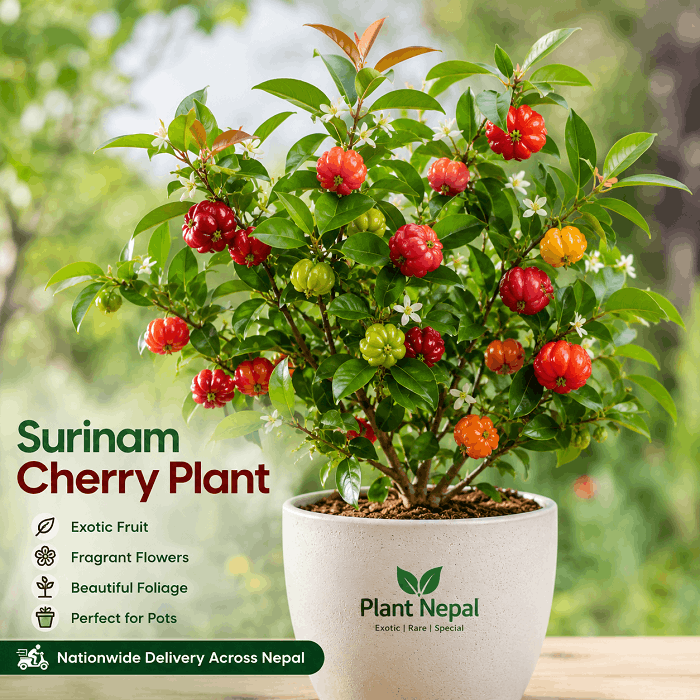
Bring something truly exotic to your home garden with the Surinam Cherry Plant (Eugenia uniflora), a beautiful and unusual fruiting plant loved by plant collectors, hobby gardeners, and anyone who enjoys growing something different.
Also known as Pitanga or Brazilian Cherry, this attractive plant is valued for much more than its edible fruit. Its glossy green foliage, reddish new leaves, delicate white flowers, distinctive ribbed fruits, and naturally bushy growth make it an excellent choice for an exotic home garden, balcony collection, terrace garden, or fruit-plant collection.
At Plant Nepal, we bring carefully selected exotic, rare, and special plants to gardening enthusiasts throughout Nepal. If you have been searching for an unusual fruiting plant that combines ornamental beauty with the excitement of growing your own fruit, the Surinam Cherry Plant is an excellent addition to your collection.
Why Choose a Surinam Cherry Plant?
Some plants attract attention because of their flowers. Others are popular because of their fruit. The Surinam Cherry Plant offers both—and its foliage adds another layer of beauty.
The plant develops into a naturally branching shrub or small tree and can be maintained at a manageable size through pruning. Its young leaves can show attractive reddish or bronze tones before maturing into glossy green foliage. Small white flowers appear under suitable conditions, followed by its unusual ribbed fruits.
According to the University of Florida IFAS, Eugenia uniflora can be grown as a specimen plant, hedge, screen, or container plant, making it surprisingly versatile for different garden styles. Learn more about Surinam cherry characteristics and cultivation from UF/IFAS.
For Nepalese gardeners, this versatility makes the Surinam Cherry Plant especially interesting. You don’t necessarily need a huge garden to enjoy it. With the right pot, sunlight, drainage, and regular care, it can become a beautiful feature in a smaller gardening space.
7 Powerful Benefits of Surinam Cherry Plant
1. Grow Your Own Exotic Fruit
The biggest attraction of the Surinam Cherry Plant is, of course, its fruit.
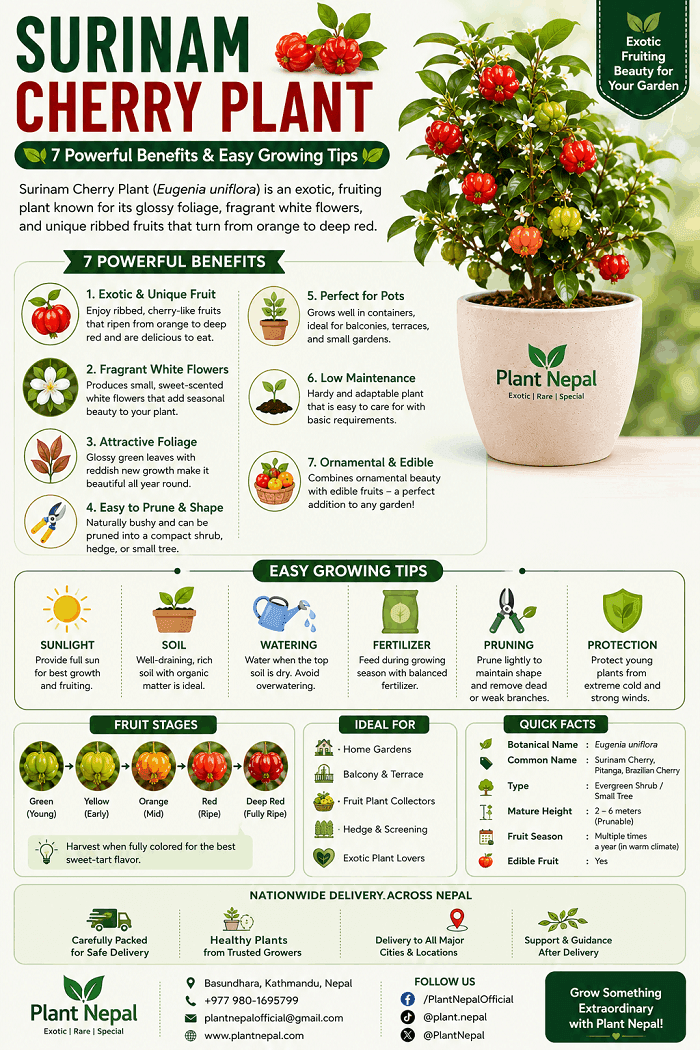
Unlike conventional cherries that many gardeners are familiar with, Surinam cherry produces distinctive ribbed fruits that are instantly recognizable. As the fruits mature, they develop attractive colors ranging from orange to deep red.
For a hobby gardener, growing these fruits is an enjoyable experience because you get to watch the entire process:
Flower → Small fruit → Developing fruit → Color change → Mature fruit
The ripe fruits can be eaten fresh and are also used in different culinary preparations. Their flavor can vary between plants and according to ripeness, with mature fruits generally being more pleasant to eat than immature fruits.
If you already grow common fruit plants, adding a Surinam Cherry Plant gives your collection something completely different.
2. Beautiful Foliage for an Exotic Garden
You don’t have to wait for fruit to appreciate this plant.
The foliage itself is attractive. New leaves may appear reddish or bronze before gradually becoming glossy green.
This changing foliage gives the Surinam Cherry Plant a distinctive ornamental appearance throughout its growth cycle.
It can look beautiful in:
- Home gardens
- Terrace gardens
- Courtyards
- Balconies
- Large containers
- Tropical-style landscapes
- Fruit gardens
- Exotic plant collections
- Nursery displays
If you enjoy combining fruit-producing plants with ornamental plants, Surinam cherry is a particularly interesting choice.
3. Fragrant White Flowers
The plant can produce small, delicate white flowers that contrast beautifully against its foliage.
These flowers are another reason plant lovers enjoy growing Eugenia uniflora. Under suitable growing conditions, flowering can eventually be followed by the development of the characteristic fruits.
This makes the plant interesting at multiple stages.
You don’t simply plant it and wait for fruit.
You can enjoy watching:
New foliage → Mature leaves → Flowers → Fruit development → Colorful mature fruit
For children and beginner gardeners, this can also be a fun way to observe how fruit develops from flowers.
4. Excellent Plant for Pruning and Shaping
The Surinam Cherry Plant naturally develops multiple branches, making it suitable for shaping.
Regular, sensible pruning can help you maintain the size and appearance you want.
You can grow it as:
- A compact bush
- A rounded ornamental shrub
- A garden specimen
- A small tree
- A hedge
- A screening plant
- A container-grown fruit plant
UF/IFAS notes that Surinam cherry can tolerate pruning and can be used as a hedge or screen. See the detailed UF/IFAS growing information here.
For gardeners with limited space, this is particularly useful.
Instead of allowing the plant to become excessively large, you can selectively prune unwanted branches and maintain a more compact shape.
However, avoid excessive pruning if your main objective is fruit production. Removing too much productive growth can reduce flowering and therefore reduce the potential fruit crop.
5. Suitable for Container Gardening
Don’t have a large garden?
No problem.
The Surinam Cherry Plant can be grown in a suitable container, making it an excellent option for gardeners with limited outdoor space.
Container growing is particularly useful for:
- Kathmandu homes
- Apartments with balconies
- Rooftop gardens
- Small courtyards
- Terrace gardens
- Rental homes
- Plant collections
Choose a strong container with adequate drainage holes. As your plant develops, you may eventually need to move it into a larger pot.
A common mistake is selecting a beautiful pot that doesn’t have sufficient drainage. For Surinam cherry, functionality is more important than appearance.
A healthy root system needs access to moisture while excess water must be able to escape.
6. A Fascinating Plant for Collectors
If you’re a serious plant lover, growing common plants can eventually become less exciting.
That’s when unusual species become particularly appealing.
The Surinam Cherry Plant gives collectors several features to appreciate:
- Unusual botanical identity
- Exotic fruit
- Attractive foliage
- Reddish new leaves
- Fragrant flowers
- Interesting fruit development
- Pruning potential
- Container-growing capability
It can become a standout plant in an exotic fruit collection.
And because many visitors may not have seen a Surinam cherry before, it can also become a great conversation plant.
7. Adds Edible and Ornamental Value to One Plant
One of the strongest reasons to choose a Surinam Cherry Plant is that it combines two valuable characteristics.
It is both:
Ornamental + Fruiting
You get attractive foliage and flowers while also having the possibility of harvesting unusual fruit under favorable growing conditions.
This makes it particularly appealing to gardeners who don’t want to choose between an ornamental plant and a fruit plant.
If you’re planning an edible garden with visual appeal, Surinam cherry can fit beautifully into the design.
Surinam Cherry Plant Care Guide
Growing a healthy Surinam Cherry Plant is straightforward when you understand its basic requirements.
The most important factors are:
Sunlight + Drainage + Appropriate Watering + Nutrition + Pruning + Protection
Let’s look at each one.
Sunlight Requirements
The Surinam Cherry Plant performs best when it receives plenty of sunlight.
A bright outdoor location is generally preferable.
Full sun can encourage strong growth and support flowering and fruit production. The plant can tolerate some partial shade, but insufficient light may result in weaker, less compact growth and reduced flowering.
When growing your plant in a container, choose a location where it receives several hours of good natural sunlight.
A sunny terrace, balcony, courtyard, or garden area can work well.
Avoid placing the plant permanently in a dark indoor corner.
Soil Requirements
Good drainage is one of the most important requirements when growing a Surinam Cherry Plant.
The plant can tolerate different soil conditions, but poorly drained soil can create serious problems for the roots.
UF/IFAS recommends rapidly draining soil for best growth. You can read the complete Surinam cherry plant profile from UF/IFAS.
For container growing, use a loose growing medium that allows air and water to move through the root zone.
A suitable mixture may contain:
- Quality garden soil
- Well-decomposed compost
- Coco peat
- Perlite or another drainage material
- Organic matter
The exact mixture can be adjusted according to your local climate and growing conditions.
The important rule is:
Moist soil is good. Permanently waterlogged soil is not.
Watering Your Surinam Cherry Plant
Young plants require more consistent attention while establishing.
Instead of following a rigid watering calendar, check the soil.
If the upper layer has started drying, water thoroughly.
If the soil remains wet, wait before watering again.
Your watering requirements will change depending on:
- Season
- Temperature
- Rainfall
- Pot size
- Soil composition
- Plant size
- Sun exposure
- Wind
During Nepal’s monsoon season, outdoor plants may receive substantial rainfall, so make sure excess water can drain away quickly.
During dry periods, check the plant more frequently.
Established Surinam cherry plants have some drought tolerance, but good watering remains important for healthy growth, particularly during establishment and periods of active flowering or fruit development.
Fertilizing Surinam Cherry Plant
A healthy growing medium is the foundation of good plant growth.
You can incorporate well-decomposed organic matter or compost into the soil and use a suitable balanced fertilizer when additional nutrition is required.
Always follow the fertilizer manufacturer’s instructions.
Avoid applying excessive fertilizer in the belief that more nutrients automatically mean more fruit.
Too much fertilizer can encourage excessive vegetative growth and may create nutrient-related problems.
If your plant is growing slowly, first check:
- Is it receiving enough sunlight?
- Is the soil draining properly?
- Are you watering correctly?
- Is the plant root-bound?
- Are there signs of pests?
- Is the plant newly transplanted?
Sometimes the solution isn’t more fertilizer—it is better light, drainage, or watering.
Pruning Tips for Surinam Cherry Plant
Pruning is useful for controlling plant size and improving its shape.
Remove:
- Dead branches
- Broken branches
- Weak growth
- Crossing branches
- Diseased-looking portions
- Unwanted shoots
- Overcrowded branches
If you want a bushier plant, selective trimming of growing shoots can encourage branching.
If you want a small tree form, gradually remove lower unwanted branches while allowing a stronger framework to develop.
If your priority is fruit production, avoid heavy pruning immediately before flowering because removing too much flowering wood may reduce fruiting.
Surinam Cherry Plant in Nepal: Important Care Tips
Nepal has an incredible range of climates and elevations, so growing conditions differ substantially between regions.
A plant that grows easily in a warm Terai location may require more protection in a cooler high-altitude area.
For gardeners in Kathmandu and similar climates, pay particular attention to seasonal changes.
During warm weather
Provide sufficient sunlight and monitor soil moisture.
During monsoon
Make sure the container or garden soil drains rapidly. Avoid allowing water to remain around the roots.
During winter
Protect young plants from unusually cold conditions and strong cold winds.
For container plants
Move the plant to a more protected location when necessary, while still providing adequate light.
If you are building a larger collection of unusual fruit plants, you can also explore the fruit plant collection at Plant Nepal to discover other options for your home garden.
Surinam Cherry Plant Pests
The Surinam Cherry Plant is generally considered relatively manageable, but no plant is completely immune to pests.
Possible pests include:
- Scale insects
- Caterpillars
- Other occasional chewing or sap-feeding insects
UF/IFAS identifies scale insects and caterpillars among pests that may affect Surinam cherry. Read the UF/IFAS care guide for additional information.
Inspect your plant regularly.
Pay special attention to:
- New shoots
- Leaf undersides
- Branch joints
- Young leaves
- Flower buds
- Developing fruits
Early identification is always easier than dealing with a severe infestation.
Avoid using pesticides unnecessarily. First identify the pest and determine whether it is actually causing meaningful damage.
Can Surinam Cherry Plant Grow in a Pot?
Yes.
This is one of its most useful characteristics for home gardeners.
When growing a Surinam Cherry Plant in a pot:
Choose a large, sturdy container
The plant needs enough room for healthy root development.
Make sure the pot drains
Drainage holes are essential.
Use quality growing media
Avoid dense soil that stays wet for long periods.
Provide sufficient sunlight
Place the pot in a bright location.
Prune when necessary
Maintain a manageable size through selective pruning.
Repot when required
As roots fill the existing container, move the plant into a more suitable-sized pot.
Container cultivation also makes it easier to move the plant when weather conditions become unfavorable.
When Will a Surinam Cherry Plant Produce Fruit?
There is no single guaranteed fruiting timeline.
It depends on:
- Plant age
- Propagation method
- Genetics
- Sunlight
- Nutrition
- Watering
- Temperature
- Plant health
- Growing environment
A mature nursery plant can generally be a more convenient choice for gardeners who don’t want to wait through the early stages of seed germination and juvenile growth.
However, transplanting can temporarily slow growth.
Give your new Surinam Cherry Plant time to establish after delivery.
Don’t panic if it doesn’t produce fruit immediately.
Healthy roots come first.
Once the plant adapts to its new location and receives appropriate care, it can begin producing new growth, flowers, and eventually fruit when conditions are suitable.
What Does Surinam Cherry Fruit Look Like?
The fruit is one of the easiest ways to identify the plant.
Unlike conventional cherries, Surinam cherry fruit has pronounced vertical ribs.
The fruit can change color as it matures, eventually becoming orange-red to deep red depending on the variety and maturity.
The unusual shape makes it particularly attractive to plant collectors.
The ripe fruit is edible and can be enjoyed fresh. It can also be used in preparations such as jams, jellies and other fruit products.
If you are growing the plant specifically for eating, allow the fruit to reach an appropriate stage of maturity rather than harvesting very early.
Why Buy Surinam Cherry Plant From Plant Nepal?
Buying an exotic plant isn’t just about finding a plant with an interesting name.
You want a reliable source, proper handling, and someone who can help when questions arise after delivery.
Plant Nepal was created for plant lovers who want access to beautiful, rare, exotic, and special plants without having to search everywhere for them.
We provide:
🌱 Exotic and rare plants
Our collection focuses on plants that add something special to your garden.
🪴 Gardening consultation
Not sure where to place your plant or how to care for it? We can provide practical guidance.
📦 Nationwide delivery
We deliver plants throughout Nepal with careful handling and packaging.
❤️ Plant-lover focused service
We don’t want customers simply to receive a plant. We want them to successfully grow it.
If you are interested in discovering more plants for your garden, visit the Plant Nepal online shop and explore our current collection.
Safe Plant Delivery Across Nepal
Living plants require different handling from ordinary ecommerce products.
At Plant Nepal, we prepare plants carefully for transportation so they can travel safely to customers throughout Nepal.
We serve plant lovers across the country, including Kathmandu and many other cities and locations.
After receiving your Surinam Cherry Plant, carefully unpack it and place it in a suitable environment.
Don’t immediately expose a newly transported plant to extreme conditions.
Give it time to settle.
A few simple steps can make the transition easier:
- Carefully remove the packaging.
- Check the plant and growing medium.
- Place it in suitable light.
- Avoid excessive watering immediately after arrival.
- Keep the plant protected from extreme conditions.
- Follow the recommended care routine.
- Contact Plant Nepal if you need assistance.
Remember that minor leaf movement, bending, or temporary stress can naturally occur during transportation. A living plant may need some time to adjust to its new environment.
Who Is the Surinam Cherry Plant Best For?
The Surinam Cherry Plant is an excellent choice for:
🌿 Exotic plant collectors
Add a distinctive fruiting species to your collection.
🍒 Fruit lovers
Grow an unusual fruiting plant at home.
🪴 Balcony and terrace gardeners
Container cultivation makes it suitable for smaller spaces.
🌱 Hobby gardeners
Enjoy watching the complete process from foliage to flowers and fruit.
🌳 Landscape gardeners
Use it as a specimen, shrub, hedge, or screening plant.
🎁 Plant lovers
An unusual fruiting plant can make a memorable gift for someone who loves gardening.
10 Easy Tips for Growing Surinam Cherry Plant
1. Give it plenty of sunlight.
A bright location supports healthy growth.
2. Use well-draining soil.
Good drainage is essential for healthy roots.
3. Don’t overwater.
Check the soil before watering.
4. Water more carefully during monsoon.
Heavy rain can keep soil saturated.
5. Feed moderately.
Use suitable fertilizer according to label instructions.
6. Prune selectively.
Shape the plant without unnecessarily removing productive growth.
7. Monitor for pests.
Inspect leaves and stems regularly.
8. Protect young plants from extreme cold.
Especially important in cooler parts of Nepal.
9. Be patient after planting.
Give the plant time to establish.
10. Ask for expert guidance.
Plant Nepal can help you with general care and growing questions.
Frequently Asked Questions
Is Surinam Cherry Plant suitable for Nepal?
It can be grown in suitable parts of Nepal when its basic environmental requirements are met. Local temperature, elevation, sunlight, soil drainage, and winter conditions should be considered before planting.
Is Surinam Cherry Plant easy to grow?
With sufficient sunlight, good drainage, appropriate watering, and regular observation, it can be a manageable plant for home gardeners.
Can I grow Surinam Cherry Plant in Kathmandu?
Yes, container or garden cultivation can be considered in Kathmandu, provided the plant receives sufficient sunlight and is protected from unsuitable cold conditions. Good drainage is particularly important during the monsoon.
Does Surinam Cherry Plant produce edible fruit?
Yes. The mature fruit is edible and is one of the plant’s main attractions.
Does Surinam Cherry need full sun?
Full sun is generally beneficial for strong growth and fruit production, although the plant can tolerate some partial shade.
Can Surinam Cherry Plant grow in a container?
Yes. It is suitable for container and above-ground planter cultivation when provided with adequate space, drainage, soil, sunlight, and care.
How often should I water Surinam Cherry Plant?
There is no universal watering schedule. Check the growing medium and water when it begins to dry rather than watering automatically every day.
Should I prune my Surinam Cherry Plant?
Pruning can help maintain the plant’s shape and size. Remove dead, damaged, crossing, or unwanted branches, but avoid unnecessary heavy pruning if fruit production is your main goal.
Is Surinam Cherry the same as a normal cherry tree?
No. Despite its common name, Surinam cherry is botanically different from the conventional cherry trees commonly associated with temperate climates. Surinam cherry is Eugenia uniflora.
Where can I buy Surinam Cherry Plant in Nepal?
You can contact Plant Nepal to ask about current availability, pricing, delivery, and plant-care guidance.
Order Your Surinam Cherry Plant From Plant Nepal
Ready to add something exotic to your garden?
The Surinam Cherry Plant is more than an ordinary fruit plant. Its attractive foliage, fragrant flowers, distinctive fruits, manageable growth habit, and container-growing potential make it an exciting choice for Nepalese plant lovers.
Whether you’re building an exotic fruit garden, expanding your rare plant collection, decorating a terrace, or simply looking for a plant that will give you something interesting to watch and grow, Surinam Cherry Plant is a fantastic option.
At Plant Nepal, we are passionate about connecting gardeners with exotic, rare, and special plants.
We also provide consultation support to help customers understand their plants and give them the care they need.
🌱 Plant Nepal — Exotic & Rare Plants for Nepal
Location: Basundhara, Kathmandu, Nepal
Phone: +977 980-1695799
Email: plantnepalofficial@gmail.com
Find us: Plant Nepal on Google Maps
Follow Plant Nepal for new plants, gardening tips, and updates:
🇳🇵 We deliver plants safely across Nepal.
Plant Nepal — Grow Something Extraordinary.


Reviews
There are no reviews yet.