
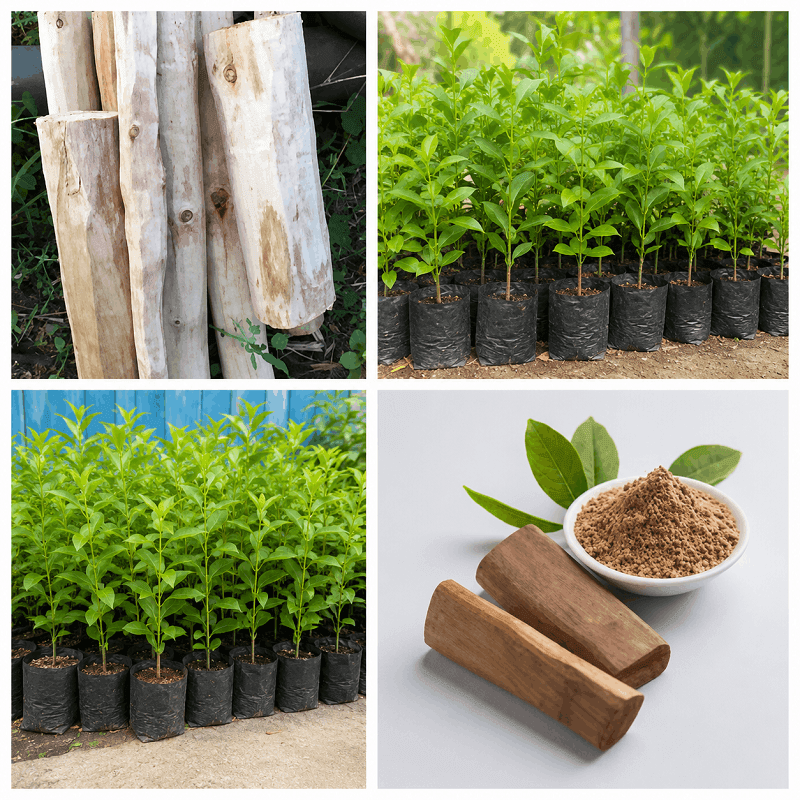
Description
Sandalwood White Plant: 9 Amazing Benefits & Growing Guide
The Sandalwood White Plant (Santalum album), commonly known as Seto Chandan (सेतो चन्दन) in Nepal, is one of the world’s most treasured aromatic trees. Revered for centuries in Ayurveda, traditional medicine, religious ceremonies, perfume production, and luxury woodcraft, the Sandalwood White Plant is a timeless symbol of purity, prosperity, and wellness.
Owning a Sandalwood White Plant is not only an investment in a beautiful and valuable tree but also a meaningful contribution to biodiversity and sustainable gardening. As the tree matures, it develops fragrant heartwood and naturally aromatic roots that are highly prized throughout Asia and beyond.
At Plant Nepal, we proudly offer carefully selected, healthy, bio-treated, and improved-quality Sandalwood White Plant seedlings suitable for Nepal’s diverse climatic conditions. Whether you are a plant collector, home gardener, commercial grower, herbal enthusiast, or landscaping professional, our premium plants are chosen to help you achieve successful growth.
Our team also provides expert consultation, planting guidance, and after-sales support so every customer can confidently grow this remarkable species.
Botanical Information
| Property | Details |
|---|---|
| Botanical Name | Santalum album |
| Common Name | White Sandalwood |
| Nepali Name | सेतो चन्दन (Seto Chandan) |
| Family | Santalaceae |
| Plant Type | Evergreen Aromatic Tree |
| Mature Height | 8–20 meters |
| Growth Rate | Slow to Moderate |
| Lifespan | 50–100+ Years |
| Sunlight | Full Sun |
| Water Requirement | Moderate |
| Difficulty Level | Easy to Moderate |
| Best Growing Zones | Tropical & Subtropical Regions |
What Makes the Sandalwood White Plant So Special?
Few trees possess the cultural, medicinal, economic, and ecological importance of the Sandalwood White Plant. For thousands of years, its fragrant heartwood has been used to create incense, sacred carvings, essential oils, cosmetics, and herbal preparations.
Unlike ordinary ornamental plants, the Sandalwood White Plant becomes increasingly valuable as it matures. Mature sandalwood is among the most sought-after natural woods in the world because of its rich fragrance and exceptional durability.
Its elegant evergreen foliage, compact growth habit, and adaptability also make it an excellent addition to home gardens, botanical collections, herbal landscapes, and agroforestry projects.
Why Plant Lovers Choose the Sandalwood White Plant
Whether you are an experienced collector or a beginner, the Sandalwood White Plant offers something truly unique.
It is admired because it:
- Produces naturally fragrant wood.
- Holds immense religious and spiritual significance.
- Has traditional Ayurvedic importance.
- Supports biodiversity.
- Enhances landscape beauty.
- Can become a valuable long-term investment.
- Requires relatively low maintenance once established.
- Thrives well in many parts of Nepal with proper care.
- Makes an exceptional gift for nature lovers.
Owning a Sandalwood White Plant means growing a living legacy that can be appreciated for generations.
9 Amazing Benefits of Sandalwood White Plant
1. Highly Valuable Aromatic Wood
The Sandalwood White Plant is globally famous for its naturally fragrant heartwood. Even decades after harvesting, genuine sandalwood continues to emit its soothing aroma, making it one of the most valuable aromatic woods available.
Its wood is widely used in premium handicrafts, sculptures, prayer beads, luxury furniture accents, and ceremonial items.
2. Rich Traditional Ayurvedic Importance
For centuries, White Sandalwood has played a significant role in traditional Ayurvedic practices. Sandalwood paste and essential oil have historically been valued for their cooling and calming properties and remain popular ingredients in wellness and personal care products.
Today, sandalwood continues to inspire herbal enthusiasts and those interested in traditional botanical knowledge.
3. Natural Fragrance for Homes and Temples
One of the most celebrated qualities of the Sandalwood White Plant is its calming natural aroma. The fragrant wood has long been used to prepare incense sticks, sacred powders, perfumes, soaps, and essential oils that create a peaceful atmosphere in homes, meditation spaces, and temples.
4. Symbol of Spiritual Purity
Across Nepal and South Asia, White Sandalwood is deeply respected in religious traditions. Sandalwood paste is commonly applied during worship, meditation, and festive ceremonies as a symbol of purity, devotion, and positive energy.
Many households choose to grow a Sandalwood White Plant because of this enduring spiritual significance.
5. Beautiful Evergreen Landscape Tree
Beyond its economic value, the Sandalwood White Plant is an elegant evergreen tree with attractive foliage and a naturally graceful structure. It adds year-round greenery and enhances gardens, herbal landscapes, eco-farms, and meditation spaces.
Its refined appearance makes it an excellent feature tree for collectors and landscape designers alike.
6. Supports Sustainable Biodiversity
Planting native and culturally significant trees contributes to healthier ecosystems. A mature Sandalwood White Plant provides habitat for beneficial insects and birds while helping diversify garden landscapes and agroforestry systems.
Growing valuable tree species responsibly also supports long-term environmental sustainability.
7. Excellent Long-Term Investment
Unlike many ornamental plants, a healthy Sandalwood White Plant becomes increasingly valuable over time. With patience, proper care, and compliance with local regulations, sandalwood trees are often regarded as premium long-term assets for landowners and plant enthusiasts.
8. Low Maintenance After Establishment
Although young seedlings require attentive care, an established Sandalwood White Plant generally becomes resilient and relatively easy to maintain. With suitable sunlight, proper drainage, and occasional pruning, it can thrive for decades.
This makes it an appealing choice for gardeners seeking a beautiful yet manageable tree.
9. A Rare Addition to Every Plant Collection
Collectors love growing uncommon species, and the Sandalwood White Plant is undoubtedly among the most prestigious. Its rarity, fragrance, historical importance, and impressive lifespan make it one of the most rewarding trees to cultivate.
If you enjoy growing exotic and meaningful plants, White Sandalwood deserves a place in your collection.
Why Buy Sandalwood White Plant from Plant Nepal?
At Plant Nepal, our mission is to make premium, healthy, and genuine plants accessible to plant lovers across Nepal.
When you order from us, you receive:
- Premium quality, bio-treated plants.
- Carefully selected healthy seedlings.
- Improved varieties suitable for Nepal.
- Expert pre- and post-purchase consultation.
- Proper packaging for safe transport.
- Secure nationwide delivery.
- Friendly customer support.
- Guidance for successful planting and long-term care.
Every Sandalwood White Plant is prepared with care so it reaches you healthy, vigorous, and ready to thrive.
Whether you live in Kathmandu, Pokhara, Chitwan, Butwal, Dharan, Biratnagar, Nepalgunj, Dhangadhi, Hetauda, or any other district, Plant Nepal delivers plants safely across Nepal using reliable packaging techniques designed to protect delicate seedlings during transit.
Growing rare plants should be enjoyable, and our team is committed to making that experience simple, educational, and rewarding for every customer.
Complete Growing Guide for Sandalwood White Plant
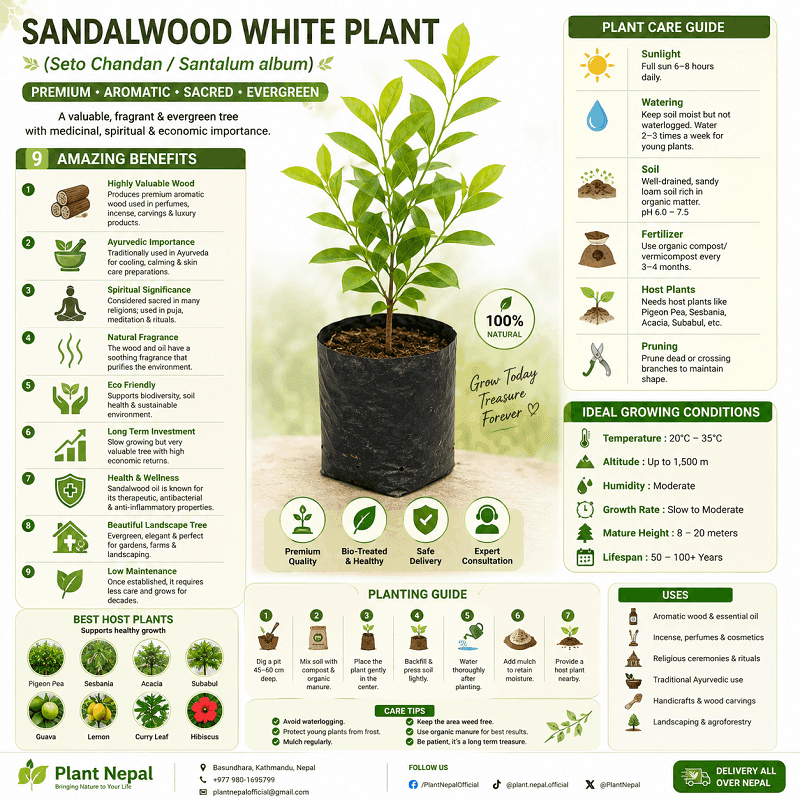
Growing a Sandalwood White Plant (Santalum album) is a rewarding long-term investment for plant lovers, hobby gardeners, and commercial growers. Although it is considered a slow-growing tree, proper care during the early years ensures healthy growth and long-lasting success. With the right environment, the Sandalwood White Plant can thrive for decades and become one of the most valuable trees in your garden.
Unlike many ornamental trees, the Sandalwood White Plant is a semi-root parasitic species. This means it naturally connects its roots with nearby host plants to obtain additional nutrients and water. Understanding this unique characteristic is the key to successful cultivation.
Ideal Climate for Sandalwood White Plant in Nepal
Nepal offers several regions suitable for growing the Sandalwood White Plant, particularly areas with warm temperatures and well-drained soil.
Suitable regions include:
- Kathmandu Valley (with frost protection during winter)
- Chitwan
- Makwanpur
- Kavre
- Dhading
- Nawalpur
- Butwal
- Dang
- Surkhet
- Nepalgunj
- Pokhara (well-drained locations)
- Jhapa
- Morang
- Sunsari
Young plants should be protected from severe frost and prolonged waterlogging. Once established, the tree becomes considerably more resilient.
Temperature Requirements
The Sandalwood White Plant grows best between:
- Ideal Temperature: 20°C–35°C
- Minimum Tolerance: 5°C
- Maximum Tolerance: 40°C (with adequate moisture)
Young plants benefit from protection during extremely cold winters in high-altitude areas.
Sunlight Requirements
The Sandalwood White Plant loves sunlight.
Recommended exposure:
- Full sun
- 6–8 hours of direct sunlight daily
- Bright open location
- Avoid permanent shade
Insufficient sunlight may reduce growth rate and weaken the plant over time.
Soil Requirements
Healthy soil is one of the most important factors for growing a vigorous Sandalwood White Plant.
Ideal soil characteristics:
- Well-drained
- Sandy loam
- Loamy soil
- Slightly rocky soil
- Rich in organic matter
- Good aeration
Ideal soil pH:
6.0–7.5
Avoid:
- Heavy clay soil
- Waterlogged areas
- Poor drainage
- Constantly wet roots
Before planting, enrich the soil with:
- Well-decomposed compost
- Vermicompost
- Organic manure
- Leaf mold
Good drainage is more important than excessive fertilization.
Watering Guide
Young Sandalwood White Plant seedlings require consistent moisture, but overwatering can damage the roots.
Newly Planted
- Water 2–3 times per week
- Keep soil slightly moist
- Never allow standing water
Established Plants
- Water once every 7–10 days during dry periods
- Reduce watering during the rainy season
- Deep watering is better than frequent shallow watering
Signs of overwatering:
- Yellow leaves
- Root rot
- Slow growth
- Leaf drop
Signs of underwatering:
- Curling leaves
- Dry soil
- Wilting
- Reduced growth
Maintaining balanced moisture is essential.
Fertilizer Requirements
The Sandalwood White Plant responds well to organic nutrition.
Recommended fertilizers:
- Organic compost
- Vermicompost
- Well-rotted cow manure
- Neem cake
- Bone meal (sparingly)
- Mustard cake compost
Apply organic fertilizer:
- Every 3–4 months
- Around the drip line
- Water thoroughly after application
Avoid excessive chemical fertilizers, especially high-nitrogen formulations, as they may encourage weak vegetative growth instead of balanced development.
Host Plants – A Unique Requirement
One of the most fascinating characteristics of the Sandalwood White Plant is that it is a semi-parasitic tree. Its roots naturally form connections with compatible host plants to access additional water and nutrients. This relationship does not usually kill the host plant but supports healthier sandalwood growth.
Suitable host plants include:
Primary Host Plants
- Pigeon Pea (Cajanus cajan)
- Sesbania (Sesbania grandiflora)
- Acacia species
- Casuarina
- Pongamia (Karanj)
- Leucaena (Subabul)
Secondary Host Plants
- Curry Leaf
- Guava
- Lemon
- Citrus
- Mango
- Hibiscus
- Drumstick (Moringa)
Planting a suitable host within 1–2 meters of the Sandalwood White Plant significantly improves long-term growth and vigor.
Planting Guide
Follow these steps for successful establishment:
Step 1
Choose a sunny location with excellent drainage.
Step 2
Dig a pit approximately:
- 45–60 cm deep
- 45–60 cm wide
Step 3
Mix excavated soil with:
- Compost
- Organic manure
- Sand (if needed for drainage)
Step 4
Place the seedling gently without disturbing the root ball.
Step 5
Backfill the hole and lightly press the soil.
Step 6
Water thoroughly after planting.
Step 7
Mulch around the base, leaving a small gap around the stem to prevent rot.
Mulching
Mulching provides several benefits for the Sandalwood White Plant:
- Conserves soil moisture
- Suppresses weeds
- Improves soil structure
- Moderates soil temperature
- Encourages beneficial microorganisms
Suitable mulch materials:
- Dry leaves
- Rice straw
- Coconut husk
- Wood chips
- Compost
Maintain a mulch layer of 5–8 cm.
Pruning Guide
The Sandalwood White Plant generally requires minimal pruning.
Prune only:
- Dead branches
- Diseased branches
- Broken limbs
- Crossing branches
Avoid excessive pruning during the early years, as maintaining a healthy canopy supports vigorous growth.
Growth Rate
The Sandalwood White Plant is naturally slow to moderate growing.
Typical growth:
- First Year: 30–60 cm
- 3 Years: 1.5–3 meters
- 5 Years: 3–5 meters
- Mature Tree: 8–20 meters
Growth varies depending on climate, soil fertility, host plants, and care.
Flowering and Fruiting
Healthy Sandalwood White Plant trees eventually produce:
- Small reddish-purple flowers
- Decorative fruits that ripen from green to dark purple or black
- Seeds that can be used for propagation
Flowering usually begins several years after planting under favorable conditions.
Propagation Methods
The Sandalwood White Plant can be propagated by:
- Seeds (most common)
- Semi-hardwood cuttings (less common)
- Tissue culture (commercial production)
Seed propagation remains the preferred method for healthy root development and long-term performance.
Common Pests
Although generally hardy, the Sandalwood White Plant can occasionally be affected by:
- Aphids
- Scale insects
- Mealybugs
- Leaf-eating caterpillars
- Termites (young plants)
Control methods:
- Neem oil spray
- Manual removal
- Organic insecticidal soap
- Maintaining good air circulation
- Regular inspection
Healthy plants are naturally more resistant to pests.
Common Diseases
Potential diseases include:
- Root rot
- Leaf spot
- Powdery mildew
- Fungal stem infections
Preventive measures:
- Avoid waterlogging
- Ensure proper drainage
- Prune infected branches
- Maintain plant spacing
- Water at the base instead of wetting the foliage
Preventive care is always more effective than treatment.
Seasonal Care Tips
Spring
- Apply organic compost.
- Check for new growth.
- Inspect for pests.
Summer
- Water deeply during prolonged dry periods.
- Mulch to conserve moisture.
- Monitor young plants for heat stress.
Monsoon
- Improve drainage if necessary.
- Reduce supplemental watering.
- Watch for fungal diseases.
Winter
- Protect young plants from frost.
- Water less frequently.
- Avoid heavy fertilization.
Indoor or Outdoor?
The Sandalwood White Plant is not suitable as a permanent indoor plant.
Best grown:
- Home gardens
- Herbal gardens
- Farms
- Agroforestry systems
- Temple gardens
- Eco-resorts
- Educational gardens
Young plants may be temporarily maintained in large containers before transplanting to the ground.
Landscaping Ideas
A Sandalwood White Plant can become a striking focal point in:
- Meditation gardens
- Zen landscapes
- Ayurvedic herbal gardens
- Temple courtyards
- Eco-farms
- Botanical collections
- Large residential landscapes
Pairing it with compatible host plants and other native species creates a diverse and sustainable garden.
Plant Care Resources
To help your Sandalwood White Plant thrive, explore these additional resources:
Internal Resources
- Plant Care Blog: https://plantnepal.com/blog/
- Medicinal Plants Collection: Medicinal Plants
- Rare & Exotic Plants Collection: Exotic Shop
External Resources
- Royal Horticultural Society (RHS): https://www.rhs.org.uk/
- Missouri Botanical Garden Plant Finder: https://www.missouribotanicalgarden.org/
These trusted resources provide valuable gardening knowledge, while Plant Nepal remains your local partner for expert guidance, quality plants, and personalized support.
Uses of Sandalwood White Plant
The Sandalwood White Plant is admired not only for its beauty but also for its wide range of traditional, cultural, and commercial uses. As the tree matures, it becomes increasingly valuable for its fragrant heartwood and enduring significance.
Some of its most well-known uses include:
- Premium aromatic wood
- Religious and spiritual ceremonies
- Meditation and yoga spaces
- Incense and handicrafts
- Traditional Ayurvedic practices
- Herbal gardens
- Botanical collections
- Eco-friendly landscaping
- Agroforestry projects
- Educational institutions and research gardens
Because of its rarity and long lifespan, the Sandalwood White Plant is often planted as a legacy tree that can be appreciated for generations.
Vastu & Spiritual Importance
In Nepal and many parts of Asia, the Sandalwood White Plant symbolizes peace, purity, wisdom, and prosperity. Sandalwood has been associated with temples, meditation, and sacred rituals for centuries.
Many gardeners choose to plant a Sandalwood White Plant because it is believed to:
- Create a peaceful garden environment
- Enhance meditation spaces
- Represent purity and devotion
- Add cultural and spiritual value to the landscape
- Become a meaningful family heritage tree
While these beliefs are rooted in tradition and culture, they should not be considered scientifically proven benefits.
Who Should Buy This Plant?
The Sandalwood White Plant is an excellent choice for:
- Plant collectors
- Hobby gardeners
- Herbal garden enthusiasts
- Landscape designers
- Eco-farm owners
- Agroforestry growers
- Botanical gardens
- Schools and colleges
- Resorts and wellness centers
- Nature lovers looking for rare tree species
Whether you have a home garden or a larger farm, this tree offers beauty, heritage, and long-term value.
Why Buy from Plant Nepal?
At Plant Nepal, we are passionate about connecting people with exceptional plants. Our goal is to provide healthy, genuine, and premium-quality plants backed by reliable guidance and customer support.
Why customers trust Plant Nepal:
- Premium, bio-treated and healthy plants
- Carefully selected improved varieties
- Genuine rare and exotic plant collection
- Expert consultation before and after purchase
- Safe and secure packaging
- Reliable delivery across Nepal
- Friendly customer service
- Guidance for successful planting and maintenance
We understand that buying a rare plant is an investment. That is why every Sandalwood White Plant is inspected before dispatch to ensure it reaches you in excellent condition.
Safe Delivery Across Nepal
Plant Nepal delivers plants safely to customers throughout Nepal using secure packaging techniques designed to protect delicate seedlings during transportation.
We regularly serve customers in:
- Kathmandu
- Lalitpur
- Bhaktapur
- Pokhara
- Chitwan
- Butwal
- Dharan
- Biratnagar
- Hetauda
- Nepalgunj
- Dhangadhi
- Janakpur
- Itahari
- Birtamod
- and many other locations across Nepal.
Our packaging minimizes stress during transit, helping your Sandalwood White Plant arrive healthy and ready for planting.
Frequently Asked Questions (FAQs)
1. What is the botanical name of the Sandalwood White Plant?
The botanical name is Santalum album.
2. What is the Nepali name?
It is commonly known as Seto Chandan (सेतो चन्दन).
3. Can it grow in Nepal?
Yes. The Sandalwood White Plant can grow well in many parts of Nepal when planted in a sunny location with well-drained soil and a suitable host plant.
4. Is Sandalwood White Plant easy to grow?
It is moderately easy to grow if its unique growing requirements, especially the use of a host plant, are understood.
5. Does it need full sunlight?
Yes. At least 6–8 hours of direct sunlight daily is recommended.
6. Can it be grown in a pot?
Young plants can be maintained temporarily in large containers, but long-term growth is best in open ground.
7. How often should I water it?
Water regularly during establishment. Once mature, water only when the soil becomes dry.
8. Is it a fast-growing tree?
No. The Sandalwood White Plant is naturally slow to moderate growing.
9. Does it require a host plant?
Yes. As a semi-root parasitic tree, it benefits from compatible host plants.
10. Is it suitable for beginners?
Yes, especially with proper guidance and aftercare.
11. Is it good for landscaping?
Absolutely. It is an elegant evergreen tree suitable for gardens, farms, and landscape projects.
12. Is it considered a rare plant?
Yes. White Sandalwood is regarded as a valuable and sought-after species.
13. Does Plant Nepal provide growing guidance?
Yes. We provide expert consultation and planting advice to help customers succeed.
14. Do you deliver outside Kathmandu?
Yes. We deliver safely across Nepal.
15. How can I order?
Simply contact Plant Nepal by phone, email, or through our social media channels.
Related Products You May Like
If you love the Sandalwood White Plant, you may also enjoy exploring:
- Red Sandalwood Plant
- Agarwood (Aquilaria) Plant
- Rudraksha Plant
- Cinnamon Plant
- Camphor Plant
- Bay Leaf Plant
- Curry Leaf Plant
- Clove Plant
- Nutmeg Plant
- Medicinal Plant Collection
Contact Plant Nepal
Plant Nepal
Premium Rare, Exotic & Special Plants for Nepal
📍 Location: Basundhara, Kathmandu, Nepal
Google Maps: https://maps.app.goo.gl/Z2XSopEf1VeMGkMG6
📞 Phone : +977 980-1695799 / WhatsApp 9861047605
📧 Email: plantnepalofficial@gmail.com
🌐 Website: https://plantnepal.com
Facebook: https://www.facebook.com/PlantNepalOfficial/
TikTok: Plant Nepal TikTok
X (Twitter): https://x.com/PlantNepal
Whether you are starting your first garden or expanding a rare plant collection, Plant Nepal is committed to providing healthy plants, expert guidance, and dependable service throughout Nepal.
Conclusion
The Sandalwood White Plant is far more than a beautiful tree. It represents heritage, fragrance, sustainability, and long-term value. With proper care, suitable growing conditions, and patience, it can become one of the most treasured plants in your landscape.
At Plant Nepal, we believe every garden deserves something extraordinary. That is why we carefully source premium-quality Sandalwood White Plant seedlings and provide expert support from purchase to planting. If you are searching for a rare, meaningful, and rewarding addition to your collection, the Sandalwood White Plant is an exceptional choice.
Order today and let Plant Nepal help you grow something truly timeless.


Reviews
There are no reviews yet.