
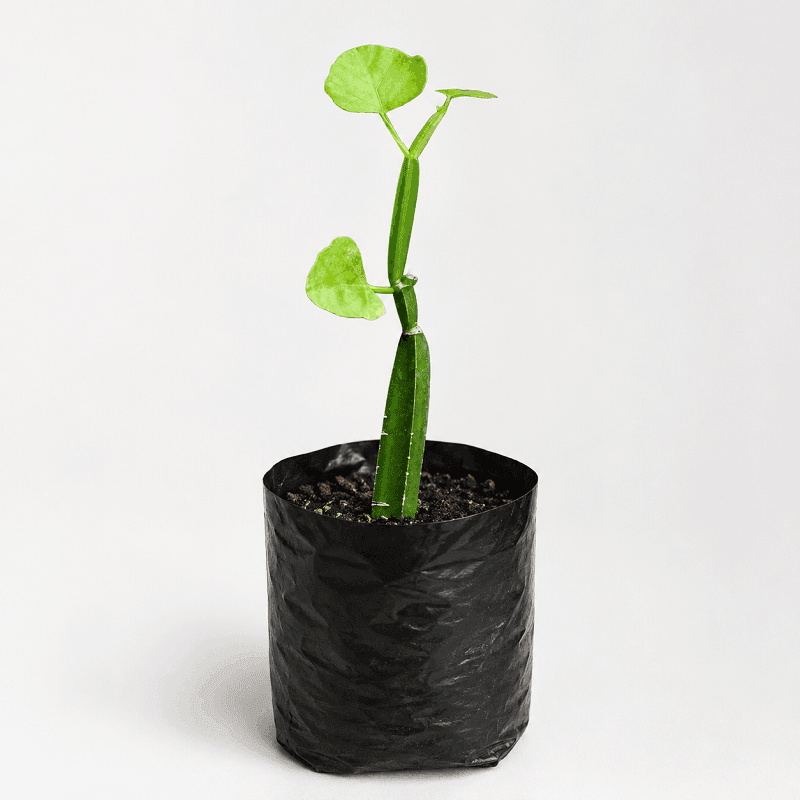
Description
Hadjod Plant (Cissus quadrangularis): 9 Amazing Benefits
Hadjod Plant – A Powerful Medicinal Climber for Every Garden
If you are looking for a unique medicinal plant that combines beauty, traditional healing value, and easy maintenance, the Hadjod Plant is one of the best choices. Scientifically known as Cissus quadrangularis, this remarkable succulent vine has been used for centuries in Ayurveda and traditional medicine due to its impressive ability to support bone health, wound healing, and overall wellness.
At Plant Nepal, we carefully select healthy, vigorous, and well-rooted Bonesetter Plant seedlings to ensure every customer receives premium-quality plants. Whether you are an experienced gardener, medicinal plant collector, herbal enthusiast, or someone starting a home garden, this extraordinary plant deserves a place in your collection.
We safely deliver healthy plants throughout Nepal with proper packaging to ensure they reach you in excellent condition.
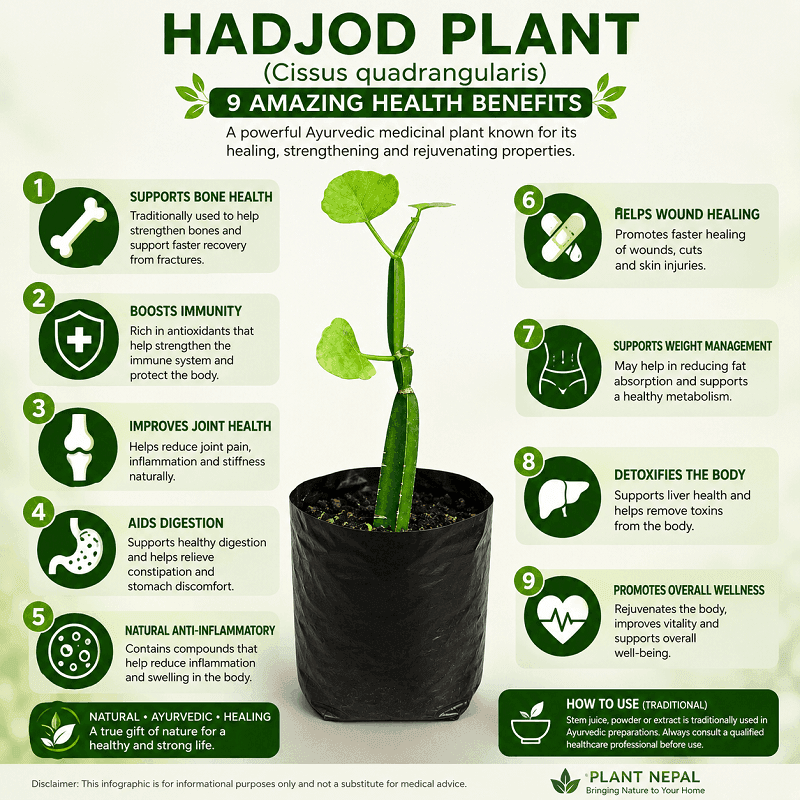
Table of Contents
- Introduction to Hadjod Plant
- Botanical Information
- Why Choose Hadjod Plant?
- Origin and Natural Habitat
- Plant Characteristics
- 9 Amazing Benefits of Hadjod Plant
- Traditional Uses
- Medicinal Importance
- Growing Guide
- Plant Care Tips
- Propagation
- Common Problems
- Frequently Asked Questions
- Why Buy from Plant Nepal?
What is Hadjod Plant?
The Hadjod Plant (Cissus quadrangularis) is a perennial succulent vine belonging to the grape family (Vitaceae). It is widely recognized by several traditional names including:
- Hadjod
- Harjor
- Asthisamharaka
- Bone Setter Plant
- Veldt Grape
- Devil’s Backbone
The name “Hadjod” literally translates to “bone joiner,” highlighting its long-standing use in traditional medicine for supporting healthy bones and fractures.
New to gardening? Read our Blog for plant care guides for practical tips on watering, fertilizing, and keeping your plants healthy throughout the year.
Unlike ordinary climbing vines, the Hadjod Plant features thick, fleshy, quadrangular stems that store water, making it highly drought-tolerant and easy to maintain.
Its unusual appearance also makes it a fascinating ornamental succulent for balconies, medicinal gardens, terraces, greenhouses, and home landscapes.
Botanical Information
| Feature | Details |
|---|---|
| Botanical Name | Cissus quadrangularis |
| Common Name | Hadjod Plant |
| Family | Vitaceae |
| Plant Type | Perennial succulent vine |
| Growth Habit | Climbing |
| Mature Height | 1–4 meters |
| Sunlight | Full sun to partial shade |
| Water Requirement | Low to moderate |
| Soil Type | Well-drained sandy soil |
| Difficulty Level | Easy |
| Growth Speed | Fast |
| Propagation | Stem cuttings |
Why Plant Lovers Love Hadjod Plant
The Asthisamharaka Plant has become increasingly popular among gardeners, herbal collectors, and natural wellness enthusiasts because it offers multiple advantages in a single plant.
It is:
- Beautiful and unique
- Easy to maintain
- Drought resistant
- Fast growing
- Medicinally valuable
- Perfect for beginners
- Suitable for container gardening
- Ideal for rooftop gardens
- Excellent for herbal gardens
Unlike many medicinal plants that require constant attention, the Hadjora Plant remains healthy with minimal care while continuously producing new succulent stems.
For additional general gardening practices and seasonal growing advice, you can refer to the Royal Horticultural Society plant care advice.
Origin and Distribution
The Hadjod Plant is native to tropical and subtropical regions including:
- Nepal
- India
- Sri Lanka
- Bangladesh
- Thailand
- Indonesia
- Africa
Today it is cultivated throughout Asia for both ornamental and medicinal purposes.
Because it adapts well to warm climates, the Hadjora Plant grows successfully in many parts of Nepal, especially in valleys, mid-hills, and warmer regions when provided with adequate sunlight.
Physical Characteristics
One of the most recognizable features of the Hadjora Plant is its thick, four-sided green stem.
The stem appears almost cactus-like but is actually a succulent vine.
Characteristics include:
Thick Quadrangular Stem
Each stem stores water, allowing the plant to survive extended dry periods.
Climbing Habit
The plant naturally climbs fences, poles, walls, and trellises.
Small Leaves
Tiny leaves appear at the joints and may fall off during dry weather.
Tendrils
Curly tendrils help the vine cling to nearby supports.
Flowers
Small yellowish-white flowers bloom during the growing season.
Fruits
The plant produces tiny reddish berries after flowering.
Why Every Home Garden Should Have Hadjora Plant
The Hadjora Plant is much more than a medicinal herb.
It serves several purposes:
- Decorative climbing vine
- Herbal medicine source
- Educational botanical specimen
- Drought-resistant garden plant
- Rare collector’s plant
- Conversation starter
- Sustainable home garden addition
Whether planted in pots or directly in the ground, it quickly transforms empty spaces into lush green vertical gardens.
If you’d like to explore botanical information about thousands of plant species, the Missouri Botanical Garden Plant Finder is an excellent educational resource.
9 Amazing Benefits of Hadjod Plant
1. Naturally Supports Healthy Bones
The most famous benefit of the Hadjod Plant is its traditional use in supporting bone health.
For centuries, Ayurvedic practitioners have valued Cissus quadrangularis as a plant that supports normal bone healing and overall skeletal wellness. It contains naturally occurring compounds such as vitamin C, carotenoids, calcium, and various phytochemicals that have been studied for their potential role in maintaining healthy bones.
While traditional use is extensive, it should not replace professional medical treatment for fractures or bone diseases. Herbal preparations should always be used under the guidance of a qualified healthcare professional.
For plant enthusiasts, growing this medicinal vine at home is a wonderful way to preserve a species with significant ethnobotanical importance.
2. Rich in Natural Antioxidants
Like many medicinal plants, the Hadjod Plant contains beneficial antioxidant compounds.
Antioxidants help protect plant tissues from environmental stress, and researchers continue to study their potential benefits for human health.
Traditional herbal systems have long used Cissus quadrangularis as part of wellness practices aimed at supporting general vitality.
Although more research is ongoing, its antioxidant profile contributes to its popularity among herbal gardeners and medicinal plant collectors.
3. Fast-Growing and Beginner Friendly
Unlike many rare medicinal species that require expert care, the Hadjod Plant is remarkably forgiving.
Benefits include:
- Rapid growth
- Easy propagation from stem cuttings
- Minimal watering needs
- Adaptability to containers
- Resistance to occasional neglect
- Long lifespan with proper care
Even first-time gardeners can successfully grow this plant with basic attention to sunlight and drainage.
Its resilience makes it an excellent choice for schools, educational gardens, herbal collections, and home landscapes.
4. Perfect for Vertical Gardening
One of the most attractive features of the Hadjod Plant is its climbing nature.
With a simple support structure, it quickly creates lush green coverage over:
- Trellises
- Balcony railings
- Garden fences
- Pergolas
- Walls
- Rooftop gardens
Its succulent stems add an unusual architectural appearance that distinguishes it from ordinary climbers.
Because it occupies vertical space rather than spreading widely, it is ideal for urban homes with limited gardening areas.
5. Excellent Drought Tolerance
Thanks to its succulent stems, the Hadjod Plant stores water efficiently.
This allows it to survive periods of low rainfall or occasional missed watering, making it suitable for busy homeowners and gardeners.
Advantages include:
- Reduced watering frequency
- Better survival during dry seasons
- Lower maintenance
- Water-wise gardening
- Suitable for eco-friendly landscapes
However, good drainage remains essential to prevent root rot.
6. A Valuable Plant in Traditional Ayurveda
The Hadjod Plant has been respected in Ayurveda for thousands of years and is traditionally known as Asthisamharaka, meaning “that which supports bones.” In many regions of Nepal and India, different parts of the plant have historically been used in herbal preparations under the guidance of experienced practitioners.
Beyond bone health, traditional systems have also used Cissus quadrangularis in practices related to:
- Joint comfort
- General wellness
- Digestive support
- Post-injury recovery
- Maintaining vitality
Modern scientific research is ongoing to better understand these traditional uses. While the Hadjod Plant has a rich ethnobotanical history, it should not be considered a replacement for professional medical advice or treatment.
For plant lovers, growing this remarkable species is an excellent way to preserve a valuable medicinal plant while appreciating its cultural and historical significance.
7. Ideal for Medicinal Plant Collections
If you enjoy collecting unusual medicinal species, the Hadjod Plant deserves a prominent place in your garden.
Many gardeners build collections featuring:
- Aloe Vera
- Giloy
- Tulsi
- Neem
- Ashwagandha
- Brahmi
- Shatavari
- Hadjod Plant
Its thick, segmented stems instantly make it stand out from ordinary herbs. Visitors are often fascinated by its unusual appearance and traditional reputation, making it an excellent educational plant for home gardens, schools, botanical collections, and herbal nurseries.
8. Low-Maintenance and Long-Living
One of the biggest advantages of the Hadjod Plant is how little care it requires once established.
Unlike delicate ornamental plants, it is naturally resilient and can tolerate occasional neglect. With proper growing conditions, a healthy plant can thrive for many years.
Reasons gardeners love it:
- Requires minimal watering
- Grows quickly during warm seasons
- Easy to prune
- Naturally drought tolerant
- Adaptable to pots and gardens
- Suitable for beginners
For people with busy lifestyles, the Hadjod Plant offers the satisfaction of growing a unique medicinal vine without demanding constant attention.
9. A Beautiful and Unique Conversation Piece
Not every plant in a garden needs colorful flowers to attract attention.
The Hadjod Plant impresses visitors with its distinctive four-angled succulent stems and climbing growth habit. Whether trained on a trellis, balcony railing, or decorative support, it creates a striking architectural display.
Its unusual structure often sparks curiosity and conversations about medicinal plants, sustainable gardening, and traditional herbal knowledge.
For anyone who enjoys growing rare and meaningful plants, Hadjod Plant is an exceptional choice.
How to Grow Hadjod Plant Successfully
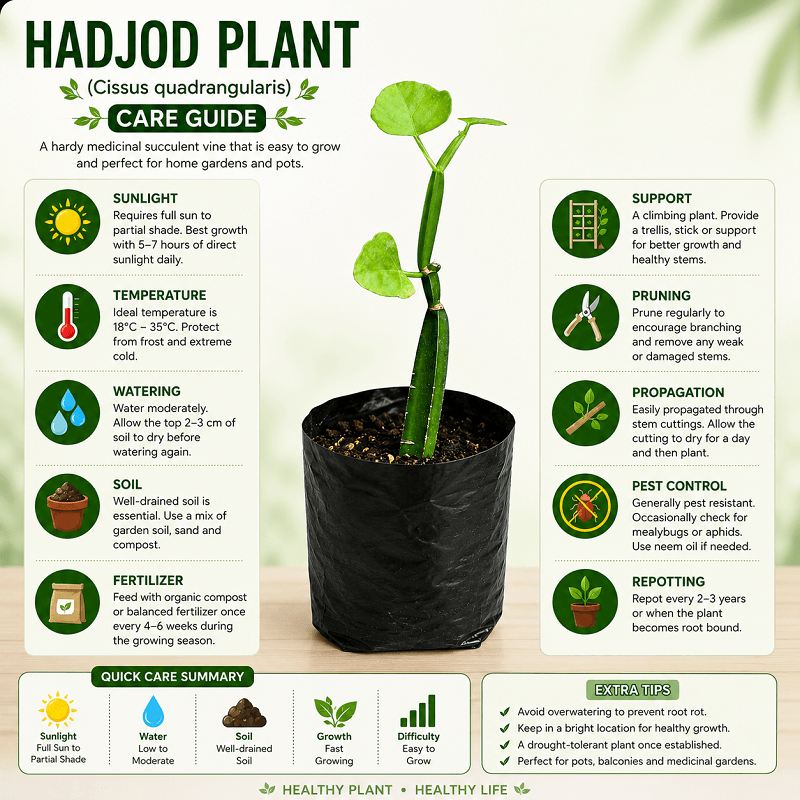
Growing the Hadjod Plant is simple when you provide the right conditions.
Sunlight
The Hadjod Plant thrives in:
- Full sun (best growth)
- Bright indirect light
- Partial shade in very hot regions
Aim for at least 5–7 hours of sunlight daily for healthy stems and vigorous growth.
Temperature
Ideal growing temperature:
- 18°C–35°C
The plant prefers warm climates and should be protected from frost or prolonged cold conditions.
Best Soil for Hadjod Plant
Well-drained soil is essential.
A recommended potting mix:
- 40% garden soil
- 30% coarse river sand
- 20% compost or vermicompost
- 10% cocopeat or perlite
Good drainage prevents root rot and encourages healthy root development.
Watering Guide
The Hadjod Plant stores water in its fleshy stems, so overwatering is one of the few common mistakes.
Summer
Water when the top 2–3 cm of soil feels dry.
Winter
Reduce watering frequency, allowing the soil to dry more between waterings.
Avoid waterlogging, especially in containers.
Fertilizing
Feed the Hadjod Plant every 4–6 weeks during the active growing season.
Suitable options include:
- Well-rotted compost
- Vermicompost
- Organic liquid fertilizer
- Seaweed extract
- Balanced NPK fertilizer (used sparingly)
Avoid excessive nitrogen, as it can encourage weak, overly soft growth.
Propagation of Hadjora Plant
One of the reasons the Hadjora Plant is popular among gardeners is its ease of propagation.
Stem Cuttings
This is the simplest and most reliable method.
Steps
- Select a healthy mature stem.
- Cut a 15–20 cm segment with at least 2–3 nodes.
- Allow the cut end to dry for a day to reduce the risk of rot.
- Plant it in a well-drained potting mix.
- Water lightly.
- Place the cutting in bright, indirect light until new growth appears.
Under suitable conditions, roots usually develop within a few weeks.
Pruning
Pruning encourages:
- Bushier growth
- Better branching
- Improved air circulation
- Easier training on supports
Remove damaged, diseased, or excessively long stems using clean pruning tools.
Repotting
Repot every 2–3 years or whenever the plant becomes root-bound.
Choose a pot with drainage holes and use fresh, well-draining soil.
Common Problems and Solutions
Yellow Stems
Possible causes:
- Overwatering
- Poor drainage
Solution:
Allow the soil to dry and improve drainage.
Root Rot
Usually caused by consistently wet soil.
Prevention:
- Use well-dr-drained soil.
- Avoid standing water.
- Water only when needed.
Slow Growth
Possible reasons:
- Insufficient sunlight
- Poor nutrition
- Cold temperatures
Move the plant to a brighter location and provide balanced fertilization during the growing season.
Mealybugs and Aphids
Occasionally, pests such as mealybugs or aphids may appear.
Control methods:
- Spray with neem oil solution.
- Remove pests manually with a cotton swab dipped in rubbing alcohol.
- Improve air circulation around the plant.
Is Hadjod Plant Safe?
The Hadjora Plant has a long history of traditional use, but any medicinal use should be discussed with a qualified healthcare professional, particularly for:
- Pregnant or breastfeeding women
- Individuals taking prescription medications
- People with existing medical conditions
The plant sold by Plant Nepal is intended primarily for cultivation, ornamental enjoyment, education, and conservation.
Why Buy Hadjora Plant from Plant Nepal?
At Plant Nepal, we are passionate about introducing rare, exotic, and medicinal plants to homes and gardens across Nepal.
When you order a Hadjora Plant from us, you receive:
- ✅ Healthy, well-rooted plants
- ✅ Premium-quality growing stock
- ✅ Carefully selected specimens
- ✅ Safe packaging for transport
- ✅ Expert growing guidance
- ✅ Friendly customer support
- ✅ Consultation for home gardens and plant care
- ✅ Reliable nationwide delivery across Nepal
Whether you are a hobby gardener, medicinal plant enthusiast, collector, or landscape designer, we are committed to providing plants that thrive.
Safe Delivery Across Nepal
We understand that live plants require special handling during transportation.
Every Hadjora Plant is packed with care using protective materials to help ensure it arrives healthy and ready to grow.
We deliver safely to:
- Kathmandu Valley
- Pokhara
- Chitwan
- Butwal
- Dharan
- Biratnagar
- Nepalgunj
- Hetauda
- Janakpur
- Dhangadhi
- and many other locations throughout Nepal.
Plant Nepal Consultation Service
Choosing the right medicinal or exotic plant can be challenging.
Our team offers guidance on:
- Plant selection
- Home garden planning
- Container gardening
- Plant care
- Watering schedules
- Organic growing practices
- Rare plant recommendations
We are always happy to help you build a thriving garden.
If you enjoy growing herbal species, Discover more medicinal plants at Plant Nepal to expand your home medicinal garden.
Product Attributes
Botanical Name
Cissus quadrangularis
Common Name
Hadjod Plant
Plant Type
Medicinal Succulent Vine
Family
Vitaceae
Sunlight
Full Sun to Partial Shade
Water
Low to Moderate
Growth Rate
Fast
Difficulty
Easy
Suitable For
Indoor Bright Areas, Balcony, Terrace, Garden, Medicinal Garden
Propagation
Stem Cutting
Plant Height
25–50 cm (approx. supplied size may vary seasonally)
Frequently Asked Questions
1. What is Hadjod Plant?
Hadjod Plant (Cissus quadrangularis) is a medicinal succulent vine traditionally used in Ayurveda and widely grown as an ornamental and herbal plant.
2. Is Hadjod Plant easy to grow?
Yes. The Hadjod Plant is beginner-friendly and thrives with minimal care, making it an excellent choice for home gardeners.
3. Can Hadjod Plant grow in pots?
Absolutely. It grows very well in pots, grow bags, and containers with good drainage and sunlight.
4. How much sunlight does Hadjod Plant need?
It performs best with 5–7 hours of direct sunlight or bright indirect light daily.
5. How often should I water Hadjod Plant?
Water only when the top layer of soil becomes dry. Avoid overwatering to prevent root rot.
6. Can Hadjod Plant survive in Nepal?
Yes. It grows successfully in many parts of Nepal, especially in warm and moderate climates with well-drained soil.
7. Is Hadjod Plant drought tolerant?
Yes. Its succulent stems store water, making it naturally drought tolerant.
8. How do I propagate Hadjod Plant?
The easiest method is by stem cuttings planted in a well-drained growing medium.
9. Is Hadjod Plant suitable for beginners?
Yes. Its low maintenance requirements make it one of the easiest medicinal plants to grow.
10. Does Plant Nepal deliver Hadjod Plant outside Kathmandu?
Yes. Plant Nepal provides safe packaging and nationwide delivery across Nepal.
Order Premium Hadjod Plant from Plant Nepal Today!
Looking for a healthy and authentic Hadjod Plant (Cissus quadrangularis) in Nepal? Plant Nepal offers carefully selected, well-rooted plants that are ideal for medicinal gardens, home landscapes, balconies, and plant collections.
Our team is passionate about rare, exotic, and medicinal plants and is ready to help you choose the perfect addition to your garden. We also provide consultation services to support beginners and experienced gardeners alike.
Why Choose Plant Nepal?
- 🌿 Healthy nursery-grown plants
- 🌿 Premium quality planting material
- 🌿 Safe packaging for live plants
- 🌿 Nationwide delivery across Nepal
- 🌿 Expert plant care guidance
- 🌿 Trusted source for rare and exotic plants
- 🌿 Friendly customer support
Contact Plant Nepal
📍 Location:
Basundhara, Kathmandu, Nepal
https://maps.app.goo.gl/Z2XSopEf1VeMGkMG6
📞 Phone / WhatsApp:
+977 980-1695799
📧 Email:
plantnepalofficial@gmail.com
🌐 Website:
https://plantnepal.com
Follow Us
Facebook
https://www.facebook.com/PlantNepalOfficial/
TikTok
https://www.tiktok.com/@plant.nepal
X (Twitter)
https://x.com/PlantNepal


Reviews
There are no reviews yet.